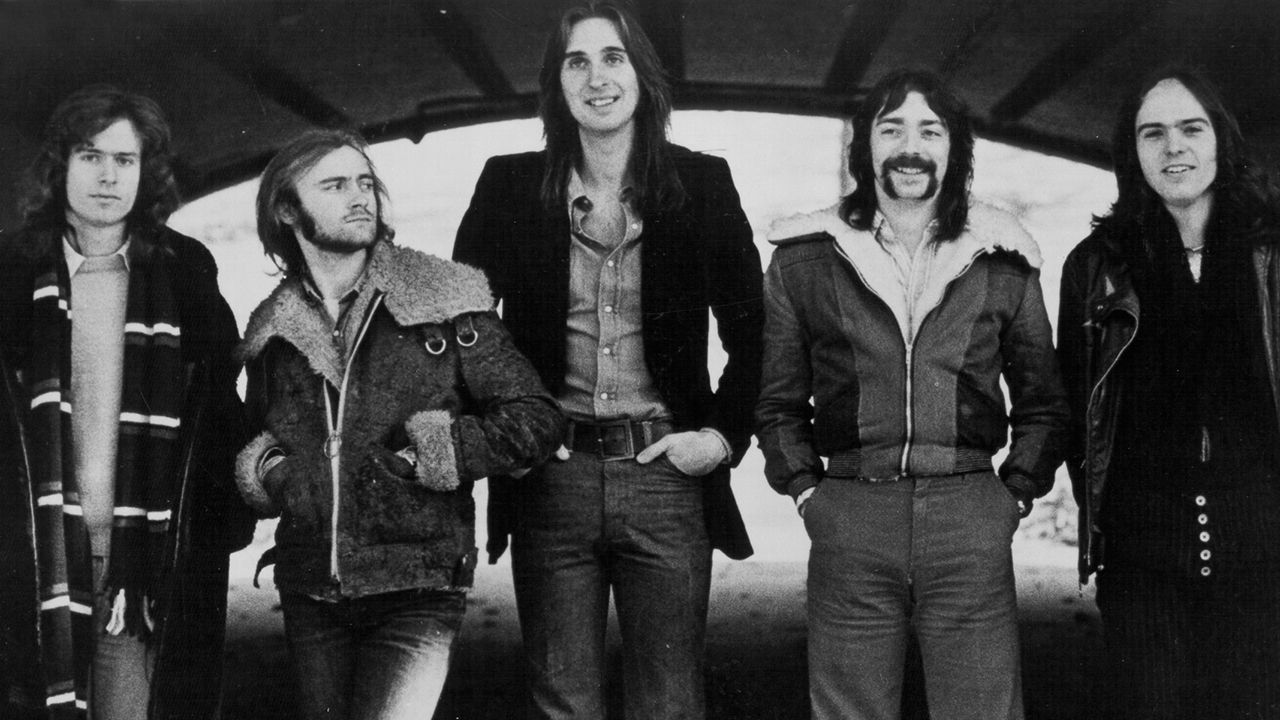
There is something almost comforting about finding out that one of progressive rock's most ambitious recordings came with a side of genuine surprise from the people who made it.
Phil Collins, speaking about Genesis and the creation of "Supper's Ready," did not describe some grand artistic vision executed with total confidence. He described a band that stumbled into something extraordinary and stood there blinking at it. Twenty-three minutes of music, edited together at Island Studios, and the response from the band was essentially: oh, that actually works.
That is not the mythology we usually get handed about prog. But it is far more interesting.
"We Weren't Very Good At It"
Collins is disarmingly honest about how Genesis ended up making the music they made. The three-minute single was the goal. The Kinks, the Beatles, the Stones. That was the template every one of them grew up on. They just could not pull it off. So they found something else they were good at and went in that direction instead.
That admission cuts through decades of reverence and retrospective profundity around the prog canon. [Gentle Giant's Octopus represents all of progressive rock's virtues. "A uniquely complex and challenging band to get into"](/uprise/music/gentle-giants-octopus-represents-all-of-progressive-rocks-virtues-a) and a similar honesty runs through how the best of that era actually got built. Not from a blueprint. From players leaning into what they could actually do.
Collins also pushes back on the "endless solo" version of prog. Genesis never had that, he says. No "let the guitarist go mad for ages" indulgence. Their stretch came from somewhere else, from meandering, collaborative writing and Collins' own instinct as an arranger for how ideas could be adapted or reprised.
"Apocalypse In 9/8" gets a specific namecheck as one of his favourite pieces they ever recorded. Mike Rutherford and Tony Banks playing in different time signatures, Collins joining whichever one he fancied at any given moment. He calls it a stroke of luck rather than a masterclass in composition. It all started as free-flowing improvisation and then they would hone it down. That process, playing together and finding the shape afterwards, is what made them genuinely distinctive.
The Blame Game
Collins also addresses the narrative that Genesis went soft when he became lead singer, and he is not having it. He got the blame because the streamlining coincided with his move to the front, and people assume the singer runs everything. He points out, correctly, that Genesis was a writing commune. The occasional hit single, "I Know What I Like (In Your Wardrobe)" and "Follow You Follow Me," came from the same writing process. They were written first and chosen as singles second. The pop direction was never a calculated pivot.
The same instinct for honest process turns up in how he talks about his solo work. A friendship with Brian Eno sparked from the Lamb Lies Down on Broadway sessions led Collins to watch Eno bring rough home recordings into the studio and trust them. He copied that approach for Face Value, using home demos as the foundation of the record regardless of clicks or hiss. The question was simply: is it good?
["Prog was a dirty word. But so much music of the time was inspired by Yes, Genesis and King Crimson, and no one was talking about it": Elbow only made it by reconnecting with their progressive roots](/uprise/music/prog-was-a-dirty-word-but-so-much-music-of) and that lineage runs through this too. The influence of what Genesis built matters. But the building of it was messier, more accidental, and more human than the legend allows.
That is the version worth holding onto.