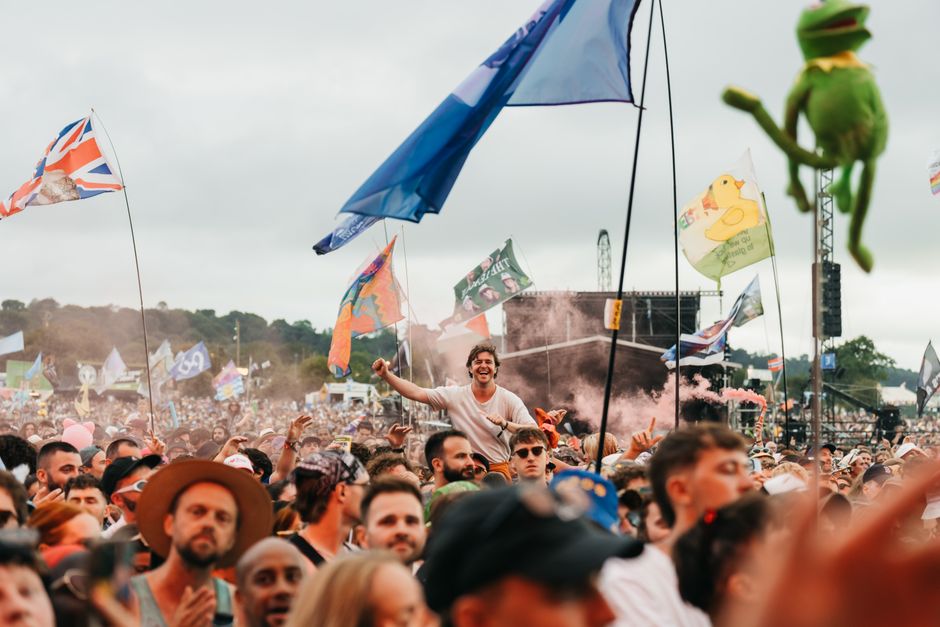
Glastonbury 2027 has gone harder on electronic music than any edition in recent memory, and the first wave of names announced on 18 November 2026 makes an unmistakable statement about where the festival thinks culture is pointing. Kraftwerk, Massive Attack and The xx on the same bill, Underworld, Basement Jaxx, Bonobo, Nia Archives and Chase & Status all confirmed for Worthy Farm across 23 to 27 June next year: this is a lineup card that reads less like a folk festival with added bass and more like someone finally let the right people programme the whole site. The headlines will be grabbed by the pop and rock names at the top of the bill, but the real story of this announcement is what it says about dance music's permanent, undeniable place at the centre of British culture.
Kraftwerk Are Finally Coming. And It Actually Matters.
The Kraftwerk announcement is the one that stopped us mid-scroll. That is a remarkable thing to absorb. A group whose fingerprints are on virtually every electronic genre that emerged from the late seventies onwards, whose influence runs through acid house, techno, hip-hop and beyond, have never played the most famous festival field in the country until now. The fact that it took this long says something odd about how Glastonbury has historically balanced its rock-and-roll roots with its electronic ambitions.
When they do arrive, it will not be a nostalgia trip in the traditional sense. Kraftwerk's live show is a visual and sonic event, a fully realised performance piece rather than a band running through the hits. Watching them on the Pyramid Stage, in a field, surrounded by people who have been there for days already, will be one of those festival moments that people talk about for years. If the weather plays ball, we are talking about something genuinely memorable. If it rains, honestly, that might make it better.
[The Manchester Clubs That Built British Music's Spine](/uprise/culture/the-lasting-legacy-of-manchesters-long-gone-nightclubs-the-i-paper) is worth revisiting in this context, because the lineage running from early electronic experimentation through to what Glastonbury is programming in 2027 is a direct one. Kraftwerk did not just influence a genre. They influenced the rooms, the people, the whole idea of what a club night could be.
The Three Headliners Tell a Story Too
Billie Eilish, Sam Fender and Harry Styles will headline the Pyramid Stage in 2027. That is the confirmed top line, and it is one of those combinations that will generate weeks of pub debate, which is exactly what a Glastonbury announcement is supposed to do. You have got the most celebrated young pop artist on the planet, one of the most genuinely credible guitar acts to emerge from British music in the past decade, and a former One Direction member who has built a solo fanbase large enough to fill any headline slot on earth. Three very different audiences, three very different nights.
Sam Fender's inclusion is the one that lands differently for anyone who cares about guitar music as more than a heritage exhibit. It signals that Glastonbury still believes there is a living, breathing indie and rock tradition worth platforming at the top of the bill, not just cycling through legacy acts. For those of us who have spent years arguing that the Pyramid Stage sometimes plays it too safe with its headliners, this is a reasonable answer.
Cher holds the Sunday legends slot, which completes the picture. The legends slot has an established logic of its own: you book someone whose cultural weight transcends genre, whose very presence makes the moment feel historic. That brief is met here.
The Electronic Undercard Is Actually the Main Event
Strip away the headliners and look at what else is confirmed for 2027: Massive Attack, The xx, Underworld, Basement Jaxx, Chase & Status, Nia Archives, Bonobo, Confidence Man, Sammy Virji. This is not a token electronic presence buried in a late-night tent. This is the backbone of a festival programme. [Acid House Built the Floor. We're Still Dancing On It.](/uprise/culture/90s-rave-culture-acid-house-clubs-and-the-summer-of) is a piece we have covered at length, and the thread from that era to this lineup is unbroken.
Massive Attack on a festival stage in 2027 carries real weight. They have never been the most prolific touring act, and every confirmed appearance feels earned. The xx completing what has been a long cycle away from the spotlight is equally significant. These are not bands doing victory laps. They are artists whose return to Worthy Farm will mean something.
Underworld and Basement Jaxx together on the same bill is almost too much. Both acts have a claim to some of the most important live performances in British festival history, and having them both at Glastonbury in the same year is the kind of coincidence that stops being a coincidence and starts looking like a decision.
Josh Baker, KETTAMA and Prospa: The Timing Is Perfect
One detail buried in the announcement deserves more attention than it got. Josh Baker, KETTAMA and Prospa will play back-to-back-to-back at Glastonbury 2027, just one week before a three-night, sold-out run at Finsbury Park. That is a remarkable position for any act to be in, let alone three DJs doing a collective b2b2b set. The sold-out Finsbury Park run was already evidence that something was happening with these three individually and as a collective proposition. Glastonbury confirming them a week before that run turns the whole thing into a moment with genuine cultural momentum behind it.
This is how scenes actually build. It is not one viral clip or one genre piece in a broadsheet. It is a convergence of events that place the right people in the right rooms at the right time, and right now that convergence is pointing squarely at these three.
What £408 and 45 Minutes Tells You About Where Glastonbury Stands
Tickets for Glastonbury 2027 went on general sale in October, priced at £408, up from £378.50 at the last edition. That is a rise of nearly ten percent and almost £30 more out of your pocket. Both coach and general sale tickets sold out in under 45 minutes each. The resale will open in spring, with no confirmed date yet.
The sellout speed makes the price debate almost academic. When demand is that high and that consistent, the festival can charge what it needs to charge, and the audience will keep showing up. What it does raise, legitimately, is the question of accessibility. At £408 a ticket before you have accounted for travel, camping gear, food and anything else across five days at Worthy Farm, Glastonbury is not a cheap weekend any more. It has not been for a long time, but the gap between aspiration and reality widens a little more with every edition.
That does not stop us wanting to be there. It just makes the pub debate about whether you can justify it slightly more painful every year.
Our Verdict: This Lineup Has Something Real To Say
Glastonbury 2027 returns from its fallow year carrying a lineup that feels less like a committee decision and more like someone with actual taste made the calls. The electronic presence is the strongest it has been, the headliners cover genuine cultural ground rather than just ticking demographic boxes, and the supporting names, from FKA twigs and Little Simz to Primal Scream, De La Soul, Ezra Collective and The Avalanches, give the whole programme depth. [How Manchester Rewired British Music From the Dancefloor Up](/uprise/culture/madchester-ministry-of-rock---the-history-of-british-rock) is a story that feeds directly into what a Glastonbury 2027 lineup like this is built on: the long, continuous line from underground electronic music into the mainstream, still being drawn.
Kraftwerk's debut alone makes next June worth circling. The rest of it makes it worth scrambling for a resale ticket in spring. See you in the field.