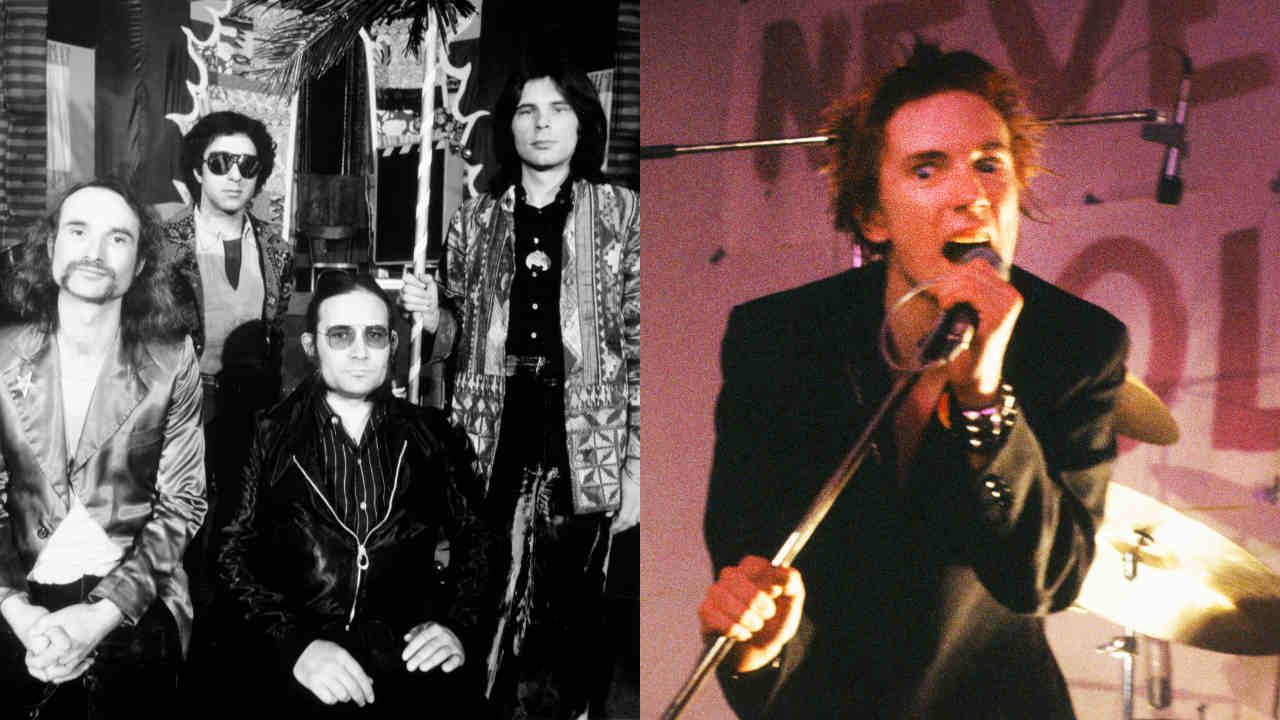
There is a parallel universe where Johnny Rotten fronted Can, and honestly, it would have been one of the most interesting bands in history. Ours is the timeline where it didn't happen, not because either party said no, but purely because Can had already packed it in before the idea could breathe.
This is not a rumour or a "wouldn't it be funny if" pub hypothetical. It is confirmed, in Irmin Schmidt's own words.
Rotten Was Ringing at Night
Can's co-founder and keyboardist Irmin Schmidt, speaking to Prog magazine, described a John Lydon who was not passively interested but actively, urgently pursuing membership of the band. "He was phoning and leaving messages at night," Schmidt recalled, "and he really wanted to become the singer of Can."
The reply he got from Schmidt was brutal in its simplicity: it was too late. Can had already split. "We finished together. We don't get onstage anymore," Schmidt told him. There was no audition to flunk, no creative clash to blame. The band had simply ceased to exist before Lydon could get through the door.
Schmidt, to his credit, did not dismiss the idea as absurd. "I know he wanted to sing with us, it was a brilliant idea," he said. "In life, there are situations where you can say, 'What if?' What would have happened if Johnny Rotten had become the singer? It's an interesting thought."
That is not the language of someone humouring a fan who got lucky with a phone number. Schmidt genuinely considered it a missed possibility.
The Man Behind the Snarl
What makes this story worth sitting with is what it tells us about who Lydon actually was underneath the "I Hate Pink Floyd" t-shirt. The prog-baiting, the sneering, the confrontational image - all of it real, but not the whole picture. He publicly championed Hawkwind, Van der Graaf Generator, and Can as major influences, artists operating at music's more difficult and experimental edges.
Can split in 1978, which is the same year Lydon walked away from the Sex Pistols and the Johnny Rotten persona along with it. The timing lines up. And when you look at what he did next, Public Image Ltd, with records like First Issue and Metal Box, the Can influence is not hard to hear. PiL pushed at the same kinds of boundaries Schmidt's band had spent years dismantling.
So the call to Can was not a mad act of reinvention. It was entirely consistent with where Lydon's head was at. He knew what he wanted to do, and he knew whose company he wanted to do it in.
Schmidt, who has a new solo album, Requiem, out on 26 September, was also asked about the Krautrock label in the same interview. His response was characteristically unbothered: "I don't care about this term: it's like lemonade, now it's used all over the world." Hard to argue with that.
Our Take
The Lydon-meets-Can story is one of those "almost happened" moments in music that actually tells you more about both parties than most things that did happen. Lydon was not the cartoon provocateur the tabloids needed him to be. Can, even in their final days, were attracting exactly the right kind of restless, genre-agnostic talent. The tragedy is not that it failed. The tragedy is that nobody got to find out what it sounded like.