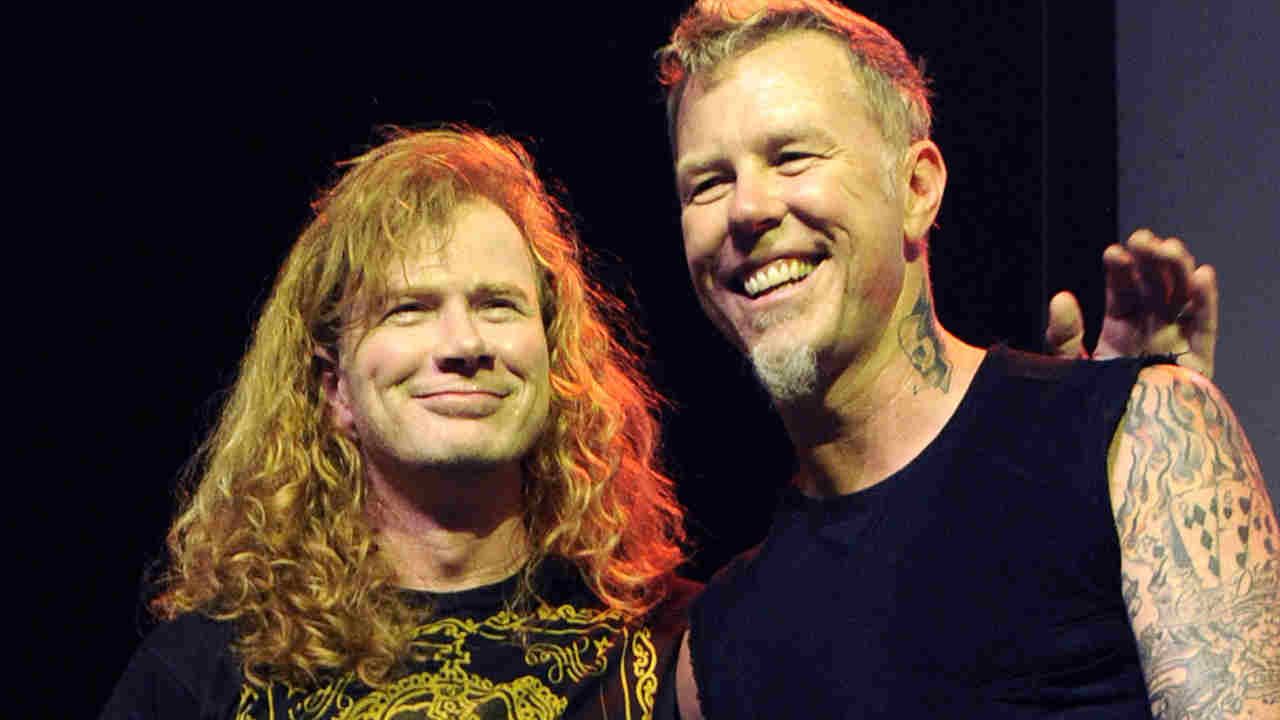
There is something quietly powerful about the image of James Hetfield picking up the phone, not to make a statement, not to post something tasteful for the timeline, but to call a man he had complicated history with, right before that man began cancer treatment.
That is what happened. And according to Dave Mustaine, writing in his upcoming book In My Darkest Hour (published 25 September by Constable), it mattered more than most things.
The call that counted
In 2019, after a routine dental check-up, Mustaine was diagnosed with throat cancer. Once the news became public, the messages came in. Ozzy Osbourne reached out. So did Paul Stanley of Kiss. And then there was Hetfield.
Mustaine is careful about how he frames it. He is not pretending this was some dramatic reconciliation between Megadeth and Metallica, some big-budget ceasefire moment for the press. He says flat out that fight had been over for years. But he is equally honest that years of history leave marks, and that he and Hetfield were not exactly close mates.
Which is precisely what makes Hetfield's gesture land so hard. He did not post publicly. He did not wait for a convenient moment. He rang privately, one to one, at the exact point when Mustaine describes himself as being at "a pretty low point." The quote Mustaine gives is worth reading twice: "Fuck the drama. Be a human being. And don't do it for clout or likes on social media. Pick up the damn phone and reach out."
That is not a man performing gratitude. That is a man who was scared, and who was reached by something genuine.
What cancer actually taught him
For metal fans who have followed the [ongoing conversation about heavy music and legacy](/uprise/music/its-their-first-real-test-as-torchbearers-for-metals-future), there is something worth sitting with in how Mustaine describes his own transformation. He is not pretending cancer was a gift. He is specific about the fear, the vulnerability, the sheer brutality of treatment. He says plainly that anyone going through a cancer battle who claims otherwise is "full of shit."
But alongside all of that, something shifted. He stopped asking "why me?" He says he is more naturally inclined now towards "why not me?" It sounds like a small change. It is not. That is someone who has stopped treating suffering as a personal injustice and started moving through it differently.
He also issues something rare from a man of his generation: a direct, unglamorous message to anyone who knows someone with cancer. Reach out. Do not let your own discomfort stop you. Show up, even if you have no idea what to say. The words, he argues, matter far less than the presence.
It is practical. It is unflashy. It is the sort of advice that [veterans of rock's harder miles](/uprise/music/ian-gillan-reveals-all-about-ritchie-blackmores-recent-deep-purple) tend to carry but rarely say aloud.
Our take
The headline names are Ozzy, Paul Stanley, James Hetfield. But the real story here is simpler than the guest list. Mustaine, a man who spent years defined partly by his grievances, came through something brutal and emerged saying: the drama is not worth it, love is what matters, and one honest phone call at the worst moment can mean everything.
We believe him. And honestly, that is a better story than any of the feuds that came before it.