
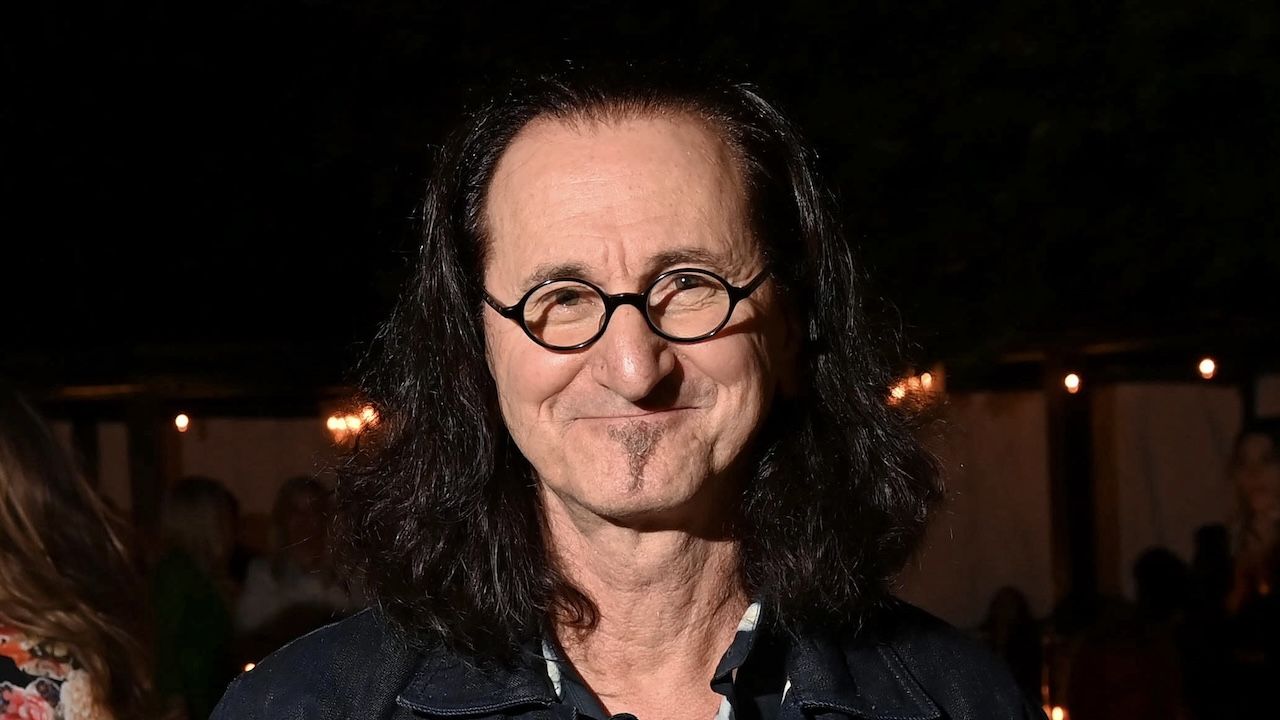
Geddy Lee has spent the better part of five decades making some of the most technically demanding rock music ever committed to tape, and yet the most important thing he has said in 2026 fits in a single sentence: "It's a dark time for people with my background." That is not a rock star reaching for relevance. That is a 73-year-old man whose parents survived Nazi concentration camps watching the world repeat itself, and deciding he will not stay quiet about it. When someone with that personal history speaks on the rise of antisemitism, we should probably put down whatever we are doing and listen.
This Is Personal in a Way Most of Us Cannot Imagine
Lee's connection to the Holocaust is not academic, not political, and not abstract. His father Moshe Meir Weinrib and his mother Mary 'Manya' Rubinstein were both Polish Jews who survived Nazi concentration camps, eventually emigrating to Canada in 1948. The bones of that sentence are bare facts, but let them sit for a moment. These were two people who went through one of the most systematic, industrialised horrors in human history, rebuilt lives on the other side of an ocean, and raised a son who would go on to front one of the biggest rock bands on the planet. Geddy Lee grew up in the shadow of that survival. It shaped everything about him.
What makes his voice in this conversation particularly significant is that he is not speaking from a distance. In 1995, he went to Poland with his mother for the 50th anniversary of her liberation, and the two of them visited both Bergen-Belsen and Auschwitz. He describes the experience as "incredibly moving" and "difficult", but also as a chance for his mother to find "some closure" on a trauma that had defined her life. That is an extraordinary thing to carry, and it is an extraordinary thing to have witnessed at close quarters. When Lee now looks at the state of the world in 2026 and says it feels like "entering the dark ages again", that is not a hot take. It is a reckoning.
What He Actually Said, and Why It Landed Hard
The interview, published in The Telegraph, is worth quoting precisely because Lee refuses to be theatrical about it. When asked whether he despairs that nothing has been learned from the Holocaust, his answer is simply: "It feels that way, yes." No grand speech. No carefully rehearsed outrage. Just a man saying the quiet part out loud, because he is tired of the quiet.
He goes further, describing the current moment as "a very unhappy time for Jewish people around the world" and expressing a guarded, conditional hope: "I'm not smart enough to see the future, but I hope common sense will prevail." That last line is doing a lot of work. It is humble, yes, but it is also bleak in its implication. Hoping that common sense will prevail suggests that common sense is not, at present, prevailing. Coming from someone whose personal history stretches directly back to what happens when common sense loses entirely, that restraint lands harder than a thousand impassioned op-eds.
The NME Nazi Slur, and Why That Irony Stings
Here is where the story takes a turn that deserves more attention than it usually gets. Back in 1978, British music paper NME labelled Rush as Nazis. The reason was that late drummer Neil Peart had drawn lyrical inspiration for the band's Hemispheres album from Ayn Rand's novel The Fountainhead. Rush, in other words, were accused of far-right sympathies partly because they engaged with philosophical ideas that some critics decided to flatten into a political accusation.
Lee calls it "pretty absurd", which is generous. The man whose parents survived the actual Holocaust was fronting a band that a British newspaper thought appropriate to compare to Nazis, based on a loose reading of some prog rock lyrics. That is not just absurd, it is genuinely grotesque in retrospect, and it speaks to how lazily political labels get applied to artists who refuse to operate in simple ideological boxes. Rush were, as Lee puts it, a band dealing in "philosophical" rather than "political" territory, and they were "easily misconstrued" because of it. The irony that Lee is now speaking out against the very ideology he was once wrongly accused of sympathising with is not something we should breeze past. It matters.
A Band About to Return to Poland for the First Time
Adding another layer to all of this is the fact that Rush's Fifty Something Euro Tour includes a stop in Krakow on 27 March next year, marking the band's first ever show in Poland. For Lee, this is not just another tour date. Poland is where his parents came from. It is the country they fled. It is the place he visited with his mother to stand at the gates of the camps and try to understand something that defies understanding. Playing there, to a live crowd, decades into a career built on the music his family's survival made possible, is going to be something else entirely.
That trip with his mother back in 1995 came 30 years after her liberation. The concert in Krakow arrives more than 80 years after the events that shaped everything about who Geddy Lee is. The fact that he is willing to talk about all of this in 2026, clearly and without dressing it up, says something about what this particular tour means to him beyond the stage show and the setlist.
Why We Should Take This Seriously
There is a version of this story that gets filed away as a musician making a statement, skimmed by people who already agree and ignored by people who do not. We would like to resist that. Lee is not a politician. He is not an activist. He is a rock musician who happens to carry an unusually heavy piece of history, and he is using his platform with remarkable restraint and seriousness. He is not calling for anything. He is not attaching himself to a cause for the optics. He is simply describing how it feels to be Jewish in 2026, with the weight of his family's specific story behind every word.
We have written here before about how difficult it is to talk clearly about hate without the conversation immediately becoming a battleground for competing grievances, but Lee sidesteps all of that. His credentials on this subject are unimpeachable. His words are measured. The concern is real. At a time when it is [increasingly easy to dismiss uncomfortable voices as agenda-driven](/uprise/football/felix-nmecha-denies-goal-celebrations-promote-intolerance-discrimination-and-hate), there is something important about an artist who earns that moment of honesty simply by telling the truth about his own life.
This Is What Using a Platform Actually Looks Like
[Liam Gallagher told the Rock Hall to get in the bin](/uprise/music/liam-gallagher-explains-why-oasis-wont-attend-their-induction-into) last month, which was entertaining in its own way. But what Geddy Lee is doing is something different, something harder. He is taking the uncomfortable thing that he knows from the inside, the thing that defined his childhood and his family's survival, and he is saying it plainly in public, without theatrics and without asking for anything in return except perhaps for people to pay attention. That is not a headline strategy. That is integrity.
The world is not short of people with opinions on antisemitism right now. It is short of people with this particular combination of personal authority, historical weight, and genuine restraint. Lee does not claim to have the answers. He says so himself. What he has is a vantage point that most of us will never occupy, and the decency to share it honestly. At 73, with a touring schedule still running and a show in Krakow on the horizon, he could have kept this to himself. He chose not to. We are glad he did not.