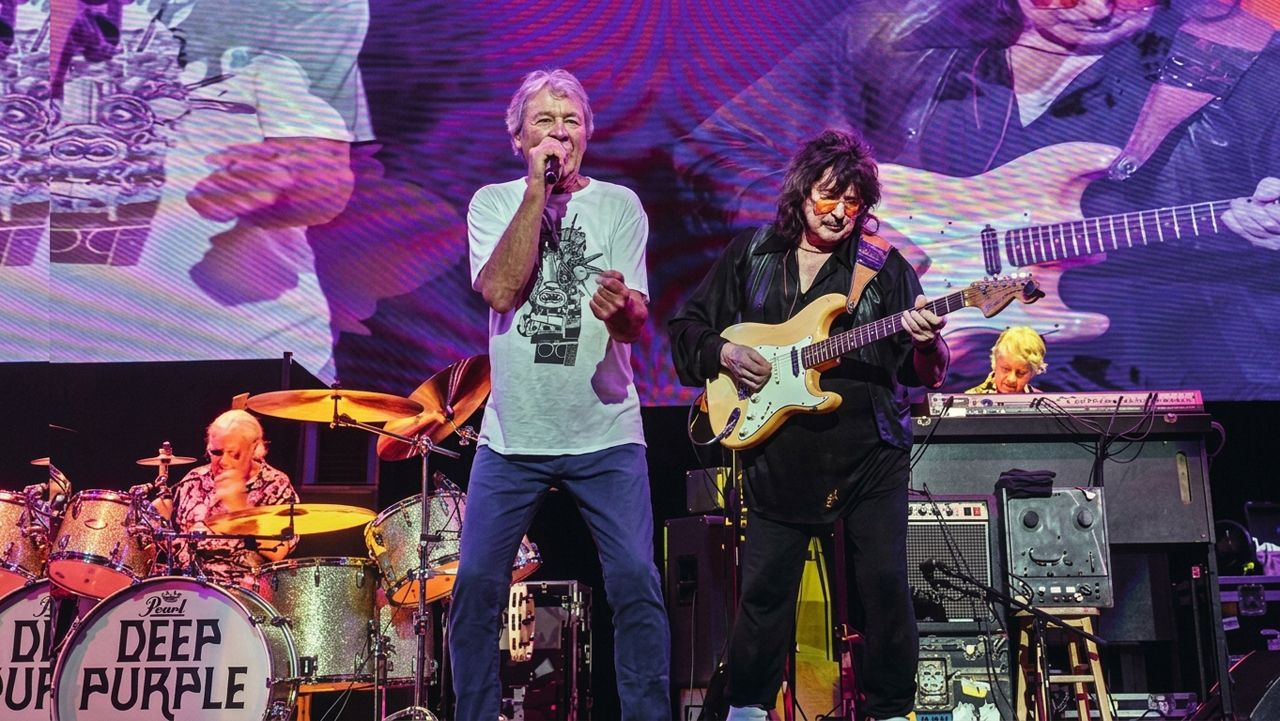
Thirty-one years of bad blood, and it took a text message to end it. Not a summit meeting, not a label-brokered handshake, not a carefully staged PR moment. Just Ritchie Blackmore on Long Island, picking up his phone and asking if he could pop round for a jam.
Rock music rarely does reconciliation this cleanly.
What Actually Happened
The facts are simple enough, and all the more remarkable for it. A couple of days before Deep Purple played the Jones Beach Theater in Wantagh, New York, Ian Gillan received a message from Blackmore. It read, in Gillan's telling: "I only live around the corner. Do you mind if I come and jam with you?" The actual request was characteristically understated: one song, an encore, no pressure, just for old times' sake.
Purple said yes. Blackmore announced it on social media. And following the thirteenth song of the night, Space Truckin', the stage went dark and quiet while roadies moved around with torches. Current Purple guitarist Simon McBride walked Blackmore out. The hat went on top of the amps. The most famous riff in rock history started up, unaccompanied. Six minutes later it was done.
Gillan's own verdict from the stage: "It was an absolute pleasure to have back on stage the founder member, the great legend, the immortal Ritchie Blackmore." Then, perfectly: "I'll see you in the bar." And he meant it literally. Gillan broke a long spell of sobriety for the occasion, breaking out a bottle of whisky backstage.
Blackmore, now 81, was candid about the emotional weight of it all when he spoke to Guitar Player afterwards. "I couldn't warm up, but I wasn't there to play correct notes," he said. "I was there to see old friends I hadn't seen in forty years." He admitted losing his place at one point, which matters not at all given the context. "I was there to heal any wounds but there weren't any wounds," he added. "Everyone was like we were in the army all along the Western Front, and we were all getting together again."
What It Means, and What It Doesn't
Gillan was measured, as you'd want him to be, when asked whether the reunion brought closure. His answer was honest rather than sentimental. As far as he is concerned, the closure happened years ago, away from any stage or camera. What Jones Beach represented was something different: "A public demonstration of friendship, and good memories."
That framing matters. This wasn't a reunion. It wasn't a comeback. It was two old men who've made their peace deciding to let the rest of the world see it. The fact that Blackmore lives on Long Island made it logistically possible. Whether it happens again depends entirely on geography: "If we play Jones Beach or New York again, possibly," Gillan said. Nothing more promised than that.
For fans who grew up understanding that the Blackmore-Gillan split was one of rock's defining, bitter divorces, the instinct is to read enormous significance into six minutes of Smoke On The Water. That's understandable. But the more honest read is that this one moment carries exactly as much weight as both men say it does: a friendly gesture between people who've quietly rebuilt something over years, finally made visible.
Sometimes that's enough. In fact, sometimes that's everything. We'll take it.