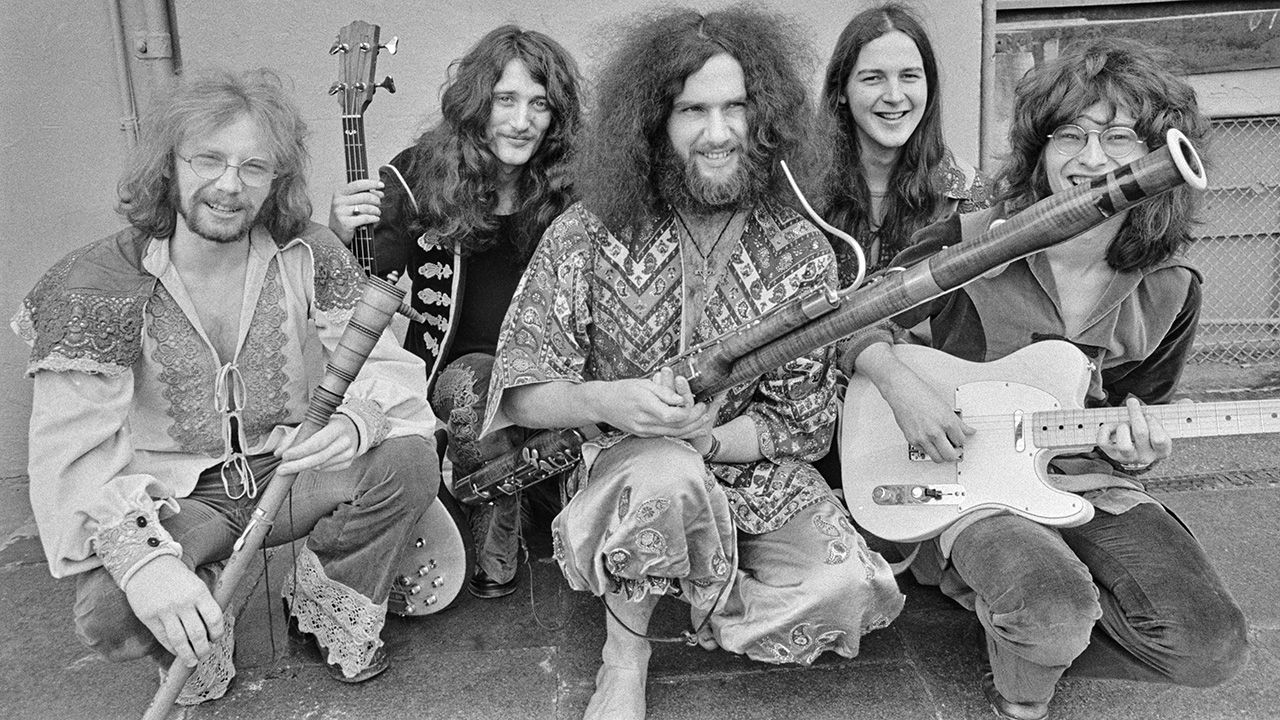
There are bands who got swallowed by their era. Gryphon are one of them, and fifty years on, that feels like a genuine injustice.
Formed in the early 1970s, the group built something genuinely singular: a sound that fused medieval and Elizabethan instrumentation with the ambition of progressive rock. No band before or since has done quite what they did. And in 1974, they had the year of their lives, then watched the door close almost immediately afterwards.
How You Build a Band Like This
The origins were odd in the best possible way. Guitarist Graeme Taylor traces his obsession back to hearing The Beatles at age nine, a moment he describes as like a cannonball hitting him. He met Richard Harvey at Tiffin's boys school in Surrey, where the two bonded over medieval and Elizabethan ensemble music. Harvey later crossed paths with Brian Gulland at the Royal College of Music.
Gulland's route was equally unconventional. He joined the Canterbury Cathedral Choir at eight and spent five years in serious musical training, but it was the bassoon, specifically what he calls "the deep farting noises" of it, that hooked him. He left the Royal College early, to the horror of his teachers, with vague notions about playing Hammond organ in a rock band. Harvey redirected him towards the crumhorn instead.
Drummer Dave Oberle came from a straight rock background, having played in a group called Juggernaut before the band recruited him. He describes it as a baptism of fire. They were all picked up by Transatlantic Records after a talent scout spotted them at local folk clubs, and their self-titled 1973 debut caused an immediate stir. According to Taylor, "we became a household name." Press officer Martin Lewis, described by Oberle as "mad as a box of frogs, but a great marketing man," helped make them the first band played on all four BBC radio stations in the same week.
1974: The Year Everything Happened at Once
That backstory matters because 1974 was when it all came to a head. Gryphon released not one but two albums, Midnight Mushrumps and Red Queen To Gryphon Three, and toured North America as the opening act for Yes. Two records in a year, made in an Oxfordshire studio with 24-hour access and live-in accommodation, put together almost entirely on the fly.
"We went in and we cobbled together bits and pieces as we went," says Gulland. Taylor recalls the process: going up to Gulland's room, sitting on the bed composing, then going straight to the studio after half an hour to record it. Not much was written down. Backs of envelopes. Fag packets. They describe practising new material for thirty seconds before attempting to record it. Somehow, it worked.
Even the Mushrumps cover shoot has a story. It was photographed at Windsor Great Park in the middle of the night, in the cold, which is why, Oberle explains, everyone's noses are bright red on the sleeve. The costumes were stolen from the National Theatre wardrobe. Taylor made the crepe-paper mushrooms himself from chicken wire and newspaper soaked in gum.
The title track ran to nineteen minutes, partly drawn from music written for a Peter Hall production of Shakespeare's The Tempest. That commission also made Gryphon the first rock band to play a live gig at the Old Vic.
It is a genuinely remarkable run. If you want to understand what progressive rock could do at its most inventive, [there's no shortage of it being revisited right now](/uprise/music/cool-new-prog-you-need-to-hear-from-downes-braide), but Gryphon remain a different category entirely. Punk arrived. Yes and Genesis had enough of a footing to survive the shift. Gryphon did not. Gulland put it plainly: "Had we started a little earlier we might have survived."
That's not self-pity. That's just the truth of timing.