
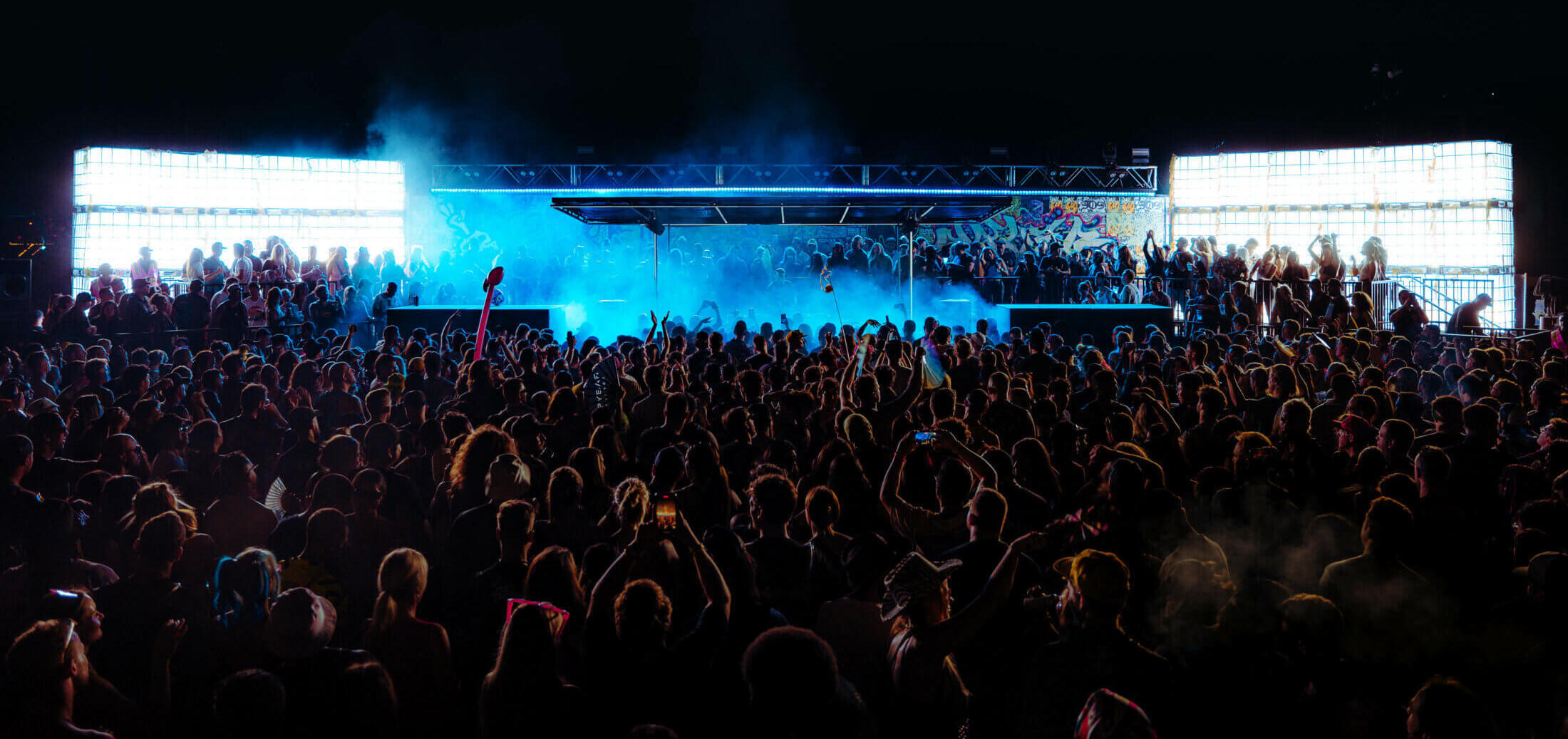
There is a version of house music history that gets told in European clubs, in Amsterdam, in London, and it starts in the wrong city. House did not emerge from some continental underground. It was born on the south side of Chicago, invented by Black and queer DJs who were doing two things at once: building an entirely new sound from the rubble of disco's commercial collapse, and creating physical spaces where people who had been turned away elsewhere could actually belong. That is not a footnote. That is the whole story.
What Killed Disco Created Something Better
By the late 1970s, the backlash against disco had left a genuine gap in Chicago's music scene. Disco had been many things, some of them genuinely joyful, but its collapse under the weight of mainstream ridicule left young people without spaces to dance, without records being made for them, without a culture that felt like theirs. Into that gap stepped a generation of musicians and DJs who refused to let the energy die.
Chip E was one of them. He had been spinning records and watching what worked on a dance floor, and when the existing repertoire started feeling stale, the response was not to retreat but to create. "We still played a lot of disco and a lot of underground disco," he says. "When that wasn't fresh, we decided we needed to create some music of our own." That sentence contains the entire logic of innovation: when the available tools stop working, you build new ones.
What Chip E built became the foundation of a genre. His track "It's House" is considered one of the first original house records, and his contributions were so foundational that he describes himself as "the architect of house music," someone who "created the blueprint that is still being followed." You can call that bravado, or you can call it an accurate description of what actually happened.
The Warehouse Was More Than a Club
You cannot tell the story of house without The Warehouse. The Chicago club ran from 1977 to 1982, and in that time it became something rare: a space that genuinely welcomed Black, gay, and alternative communities at a moment when most venues did not. The music was the magnet, but the community was the point.
Chip E's description of The Warehouse is telling. "It really was a place that people went home to," he says. That phrase carries more weight than it might first appear. For the people who built the early house scene, these were not just nights out. They were acts of reclamation, nights where you could exist fully without bracing yourself against the kind of exclusion that the rest of the week routinely handed you. The music was inseparable from that feeling.
The Warehouse also gave the world Frankie Knuckles. His experimental sets drew thousands, and his insistence on quality, on going beyond what the technology of the moment could easily produce, helped push the entire genre upward. Chip E, who produced Knuckles's very first song, remembers him demanding a live brass ensemble rather than settling for sampled horn sounds. "It moved beyond samples and computerized music," Chip recalls. "It added another layer to it." That ambition became part of house music's DNA.
What Actually Made It Sound Like House
The sonic identity of house music came together in those early Chicago years and it was both specific and universal. The booming four-on-the-floor bass drum. The moving bass line that sits below everything and pulls you forward. The minimalist vocals, present enough to feel human but stripped back enough that they never interrupt the rhythm's authority. These were deliberate choices made by people who understood exactly what a dance floor needed.
Chip E's own explanation of what house was for cuts through any critical abstraction pretty cleanly. "House music is made for the dance floor," he says. "I wanted to make people's butts move. It's not made to be listened to while you're sitting down." There is no hedging in that. The genre had a purpose, it was unapologetically physical, and everything in its construction served that purpose. That clarity of intention is part of why it lasted.
How Chicago Went Global Overnight
The shift from underground to mainstream did not happen slowly. International media picked up the story of what was happening in Chicago and spread it across Europe, and suddenly Chip E and his peers were watching long queues form outside venues, filled with people who had travelled from other countries just to be in the room. "All of a sudden we were catapulted into the mainstream," he says. "We went from local Chicago DJs to being super rock stars almost overnight."
That speed matters, because it also created the conditions for the credit to get lost in transit. When a cultural movement travels faster than the story of its origins, the story gets rewritten by whoever encounters it next. House landed in the UK and Europe with enormous force, and the people there experienced it as something new, something local, something of theirs. And the city that made it watched the narrative drift. This is not a minor grievance. It is the central injustice of house music's global history, and it is still being corrected now.
The fact that some people genuinely believe house started in Europe is not a matter of ignorance, it is a matter of whose version of history got told more loudly. [The Madchester scene, to pick one example from closer to home, understood exactly how powerful a local music identity could be](/uprise/culture/what-was-madchester-the-manchester-shop), and how quickly that identity could be claimed and commodified by others. Chicago's experience with house is the same pattern, playing out on a global scale.
Chicago Is Reclaiming Its Own Story
The work of reclaiming the history is active and ongoing. The Warehouse, the club where so much of this started, was designated an official city landmark, an acknowledgement that the building itself is part of the cultural record. Frankie Knuckles's personal record collection is now preserved and catalogued at the Stony Island Arts Bank, which means the actual physical artefacts of the genre's early life are being cared for in the city where they were made.
Chip E has also been doing his part directly. He filmed and edited a documentary, "The Unusual Suspects: Once Upon A Time In House Music," gathering interviews with the biggest names from the scene, putting the oral history on record before more of it disappears. His reasoning is straightforward and impossible to argue with: "There are a lot of people who aren't aware it started in Chicago, on the south side of Chicago. There are people that think it started in Europe, London, Amsterdam. The world needs to know and recognise that this is Chicago music."
The Chicago House Music Festival, held at Millennium Park each spring, is part of the same effort. So are the Chosen Few Picnic in July and the ARC Music Festival over Labour Day weekend. Venues like Smartbar, Spybar, and Sound-Bar continue to run lineups rooted in the genre. This is not nostalgia. It is a city insisting, year after year, that it knows what it made. [The broader story of how Chicago house rippled outward and shaped electronic music globally is worth understanding in full](/uprise/culture/the-history-of-house-music-and-its-cultural-influence), particularly because that ripple started from a very specific, very intentional act of communal creation.
The Verdict
House music was invented by Black and queer communities in Chicago who needed a sound and a space that the mainstream refused to give them. What they built changed the entire shape of popular music, influenced artists across every corner of the musical spectrum, and turned their city into a global destination. The fact that the credit drifted elsewhere is not an accident of geography. It is the predictable result of whose stories get told and whose get absorbed into someone else's origin myth. Chicago is telling its own story now. The rest of the world owes it the decency to listen.