
There is no cultural movement in British music history quite like Madchester, and if you need convincing of that, you are probably too young or too stubborn. What emerged from Manchester in the late 1980s was not a genre or a fashion trend or a marketing category: it was a full-blown collision of worlds, one that scrambled the frequencies between indie rock, acid house, and dance music into something nobody had heard before and nobody has quite replicated since. It rewired what British youth culture thought music was allowed to be, and the fact that we are still talking about it, still wearing its clothes and sampling its records, tells you everything about how deep those roots actually went.
Where Did It All Actually Come From?
The story starts, as so many good ones do, in the unglamorous machinery of a city that refused to coast. Manchester in the late 1980s was a place with a thriving club scene and a music community that did not wait for permission from London. The bands that formed the backbone of Madchester, most obviously The Stone Roses, Happy Mondays, and Inspiral Carpets, were not working from a template. They were pulling threads from post-punk, psychedelia, and funk, knotting them together and daring anyone to unpick it.
What made that combination so potent was the fact that none of those ingredients should have worked as a unit. Post-punk carries grit and tension; psychedelia floats and dissolves; funk demands to move your body. Put them in the same room and you should get chaos. What those bands got instead was a sound with genuine emotional range, one that could soundtrack a warehouse at 3am and a Sunday afternoon equally well. That range is exactly why the music connected so widely and so quickly.
The Charlatans were also part of that original wave, adding their own weight to a scene that was broadening by the month. What they shared, all of them, was a DIY instinct: recording in their own spaces, making their own artwork, building a community from the ground up rather than waiting for the industry to come and find them. [How Madchester Rewired a Generation From the Inside Out](/uprise/culture/origins-of-madchester-music-and-culture) tells that origin story in full, and it is worth your time.
The Haçienda: More Than Just a Venue
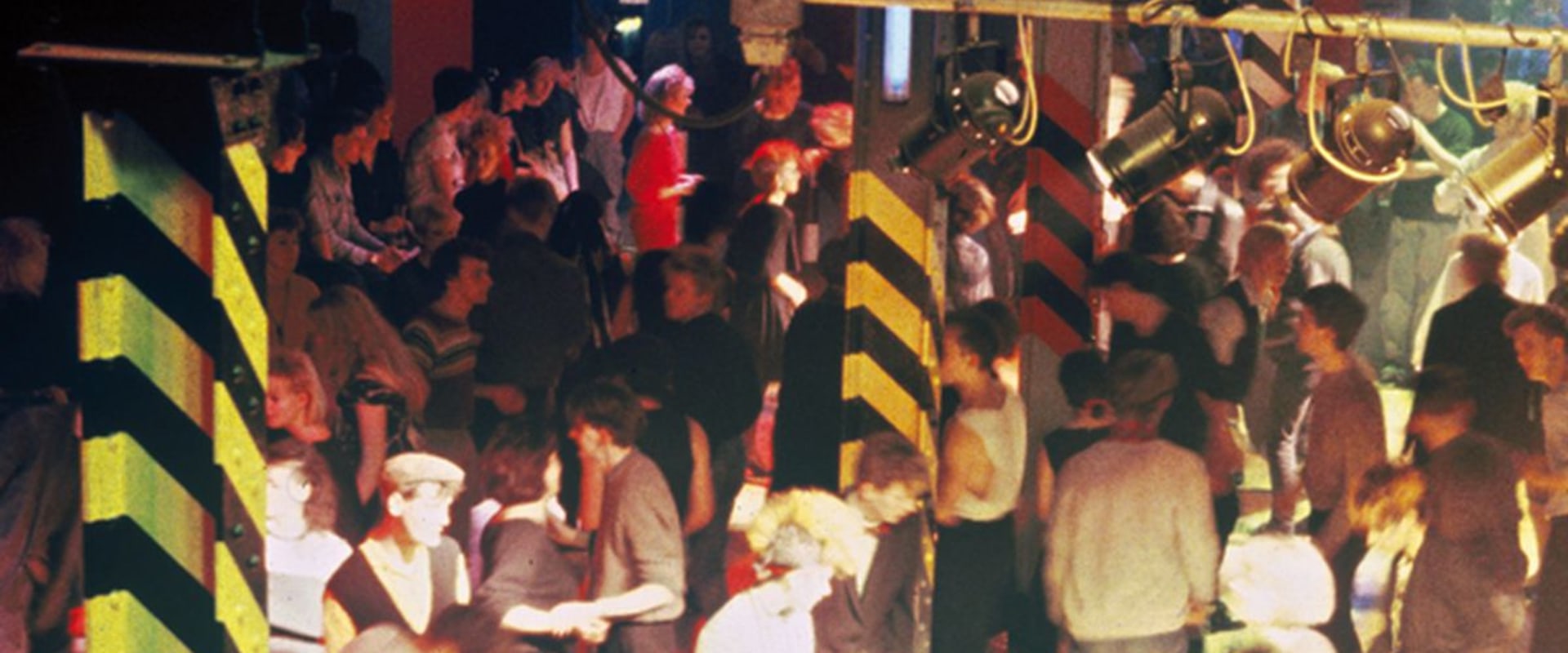
If the bands were the face of Madchester, the Haçienda was its nervous system. The legendary club became the focal point for the entire movement, a place where the music of those bands and the new electronic sounds coming out of the global dance underground met in the same room. It was not just a place to watch live acts: it housed some of the most forward-thinking DJs operating anywhere in the world at the time, people who were pioneering a style of electronic dance music that would eventually become one of the planet's dominant genres.
[The Manchester Clubs That Built British Music's Spine](/uprise/culture/the-lasting-legacy-of-manchesters-long-gone-nightclubs-the-i-paper) covers the full context of what those venues meant to the city and to British music more broadly, but the short version is this: without rooms like the Haçienda, Madchester does not happen. The rave scene and the band scene were feeding each other at exactly the right moment, and the club was the place where that exchange took place every weekend.
That intersection with rave culture is one of the things that makes Madchester so genuinely interesting when you look back at it. This was not a scene where bands stayed on stage and clubbers stayed on the floor. The two cultures bled into each other, with rave events held across venues throughout Manchester, spreading the music outward and ensuring that what was happening in the city could not be contained by geography alone.
The Look That Refused to Be Understated
Fashion was never an afterthought in Madchester. It was a statement. The look that defined the scene was built around bright colours, bold patterns, oversized clothes, and the now-iconic baggy silhouette: baggy trousers, oversized shirts, and flamboyant hairstyles that announced you from across the room. It was a look that belonged to no previous decade and owed nothing to the sharp tailoring or the dark minimalism that had come before it in British youth culture.
The baggy aesthetic became so deeply tied to the scene that wearing it was a form of allegiance. Fans carried badges and wore t-shirts that announced their attachment to the movement, and there was a genuinely communal identity at the heart of it. This was not fashion as aspiration; it was fashion as membership.
That community feeling extended into how the music was made. The scene's strong DIY ethos meant that bands were not waiting for studio budgets to arrive. They recorded at home, produced their own artwork, and built the infrastructure of the scene themselves. That self-sufficiency gave Madchester a texture and an authenticity that industry-managed movements rarely achieve, and it is a big part of why the culture felt owned by the people inside it rather than sold to them.
How Far Did It Actually Travel?
The honest answer is: further than anyone could have predicted when it started. The success of The Stone Roses and Happy Mondays in particular meant that Manchester's sound was heard around the world. The Stone Roses toured across Europe and America, bringing the full collision of indie and dance music to audiences who had no existing framework for it. Similar scenes began emerging in cities across the UK, in London and Bristol among others, as the movement's energy rippled outward from its source.
Madchester also influenced musicians in other countries, with international acts drawing directly from what Manchester had built. The impact on British culture went well beyond the music, reaching into film and television in ways that embedded the scene into the national cultural memory. The 2002 film 24 Hour Party People gave the story a mass popular reach that went far beyond the people who had lived it in real time, introducing Madchester to a new generation on its own terms.
[How Manchester Rewired British Music From the Dancefloor Up](/uprise/culture/madchester-ministry-of-rock---the-history-of-british-rock) puts the full arc of that influence into context, and reading it alongside [Acid House Built the Floor. We're Still Dancing On It.](/uprise/culture/90s-rave-culture-acid-house-clubs-and-the-summer-of) shows just how much of modern British music culture traces a direct line back to what was happening in Manchester during this period.
Why It Still Matters Right Now
The legacy of Madchester is not some heritage industry talking point or a nostalgia trip for people who were there. It is an active, present influence. The music is still being listened to, the fashion keeps resurfacing in cycles that feel inevitable rather than cynical, and the DIY community ethos that defined the scene is still the model that the best independent music scenes operate on.
What Madchester proved, and what still resonates, is that you do not need a single genre to build a movement. You need a city with the energy to hold competing ideas in the same room, a few venues brave enough to let those ideas collide, and a generation willing to dress the part and mean it. Manchester had all three. The result was a movement that influenced generations of musicians and fans alike, and that holds its place as one of Britain's most genuinely iconic cultural moments. Not because anyone decided it was iconic retrospectively, but because it changed what came after it in ways that were real and measurable. That is the test, and Madchester passes it.