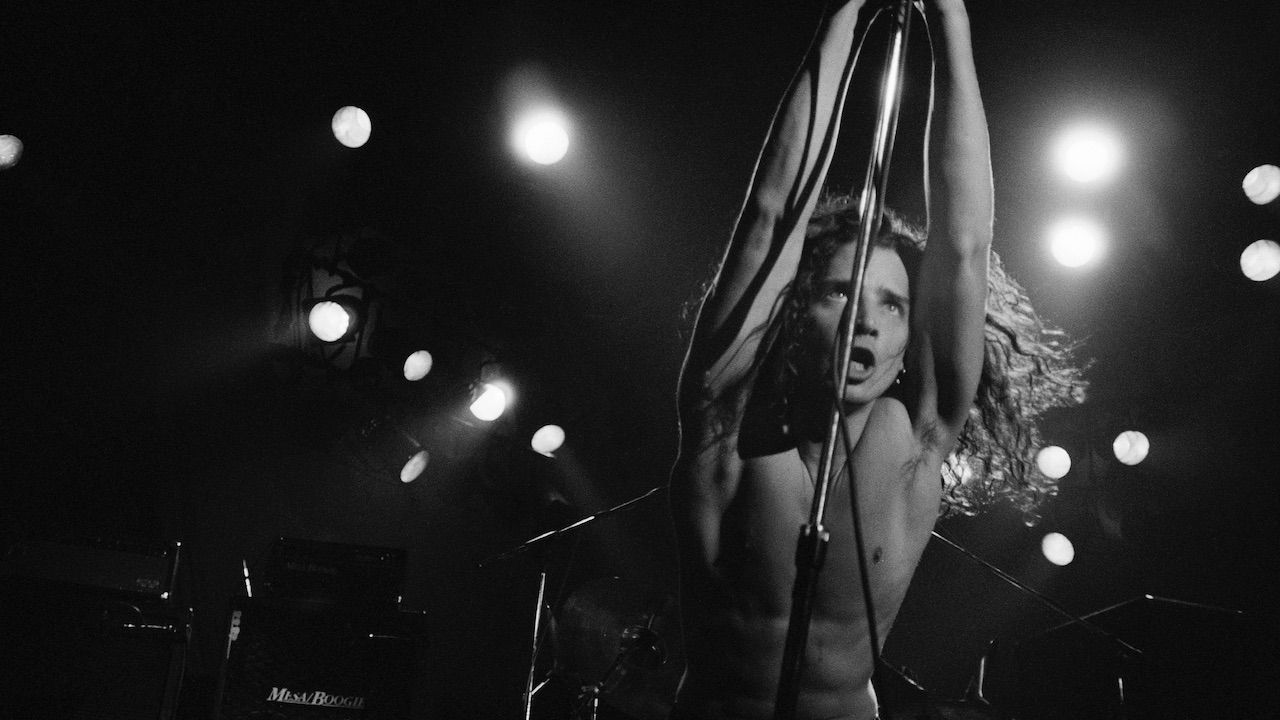
There is a version of music history where Soundgarden are remembered as a footnote. A Seattle band who quit the punk credibility of SST Records, signed to a major, and got swallowed by the machine. That version is wrong, and Louder Than Love is the evidence.
Released on 5 September 1989, the album is a messy, abrasive, genuinely strange record, and that is precisely why it matters.
The Band That Couldn't Be Pinned Down
Soundgarden formed in 1984 with a stated ambition that tells you everything: they wanted to be Black Sabbath without the parts that suck. That sentence is both a love letter and a critique, and it captures the tension that ran through everything they did. The Seattle rock community couldn't decide if their Sabbath, Stooges and Zeppelin-influenced sound was sincere or a wind-up. Chris Cornell and Kim Thayil never bothered clarifying it.
When they jumped from SST to A&M, becoming the first band from their peer group to sign to a major label, the suspicion intensified. And then people actually heard Louder Than Love, and the "sell-out" narrative collapsed immediately. This was not a record chasing radio play.
Kim Thayil plays a one-note drone guitar through the opening two minutes of Ugly Truth. Hiro Yamamoto's I Awake opens with the line "Woke up depressed, I left for work, you have a good day, it's not your fault." Gun, written about Cornell's occasional desire to grab some rich broker and rip his head off, shifts time signatures and tempo with no concern for listener comfort. And Big Dumb Sex, a parody of disco's sexual innuendo, has Cornell wailing the same four-letter word on a loop while a spoken-word drawl creeps underneath his melody. Cornell told Melody Maker in 1989 that the song was about deciding to be bold rather than beat around the bush, and that writing it meant he'd never need to write something like it again. Fair enough.
The revisionist claim that this was Soundgarden edging toward the mainstream is nonsense. In 1989, the mainstream was Pump, Dr. Feelgood and Skid Row. Louder Than Love would have baffled those audiences. It barely dented the Billboard 200, peaking at number 108.
The Album That Changed the Equation
What Louder Than Love actually did was establish Cornell as the dominant creative force in the band. The songwriting had been split fairly evenly on 1988's Ultramega OK, but here Cornell's contributions carry more weight, a shift that contributed to Yamamoto eventually leaving the group. Tracks like Ugly Truth, Loud Love and Uncovered are where the album burns brightest.
It also positioned Soundgarden at the front of a wave. MTV's 120 Minutes had started identifying a new breed of charismatic figureheads at the fringes of the mainstream, Mike Patton, Trent Reznor, Perry Farrell among them, and Cornell belonged in that company. The band would sharpen everything on Badmotorfinger in 1991, but [the lineage from abrasive outsider noise to something that genuinely changed how people listened](/uprise/music/ive-never-done-hallucinogenic-drugs-but-now-it-feels-like) runs directly through this record.
Louder Than Love didn't sell a generation on Soundgarden. It did something more useful: it proved that a band could be heavy, weird, funny, and completely uninterested in your approval, all at the same time. That is a harder trick to pull off than it looks, and most bands never manage it.
The cassette was cued up on Big Dumb Sex. The date did not go well. The album was worth it.