
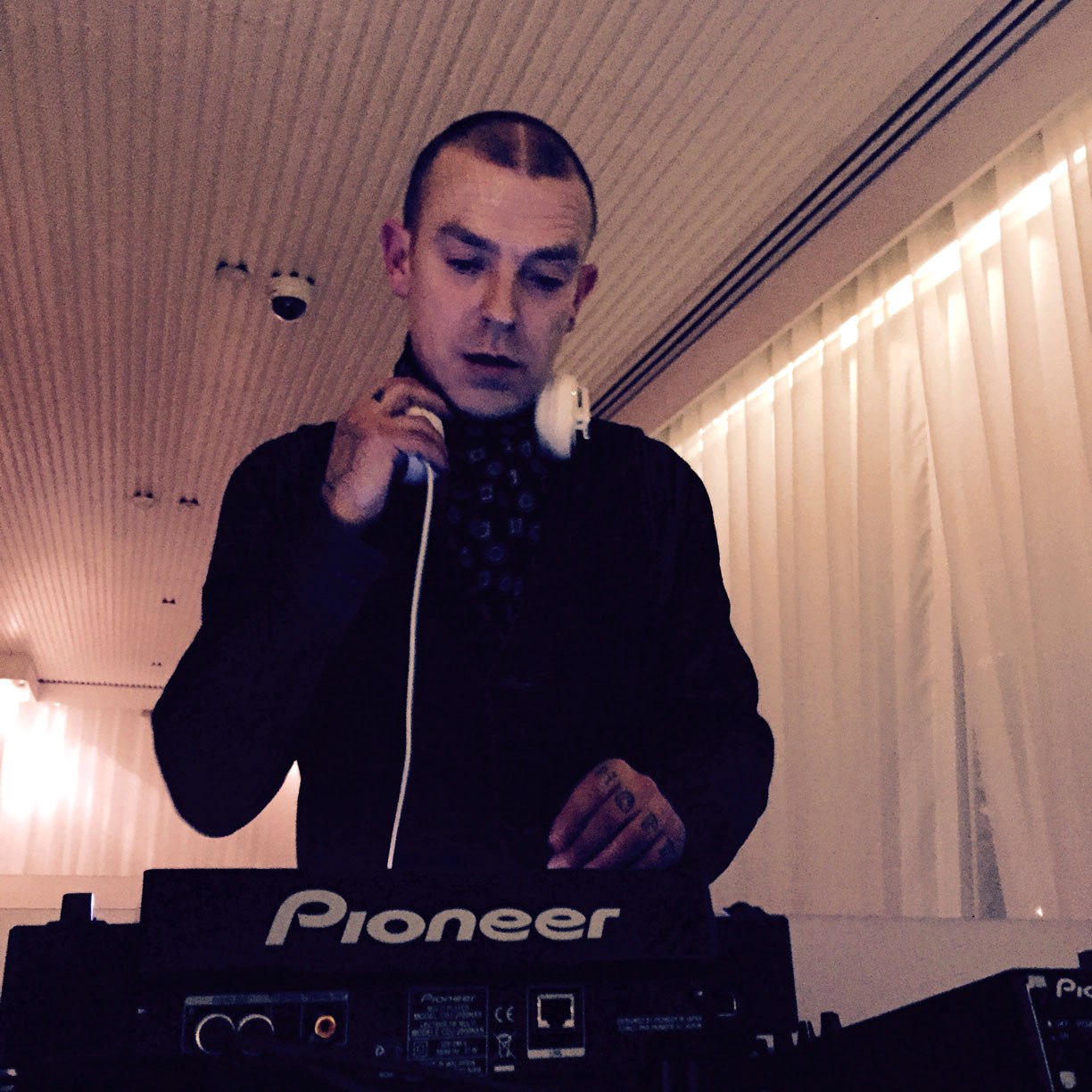
There is a version of British music history in which Adamski is a footnote, a one-hit wonder who handed Seal the song of his life and then disappeared. That version is wrong, and it has always been wrong. Adam Paul Tinley, born in Lymington, Hampshire on 4 December 1967, was making records before most of the acid house generation had even heard a Roland drum machine, and he was still making them decades after the scene that made him famous had dissolved into nostalgia packages and anniversary documentaries. The real story of Adamski is not about one song. It is about a person who was, in every sense, constitutionally incapable of stopping.
Eleven Years Old, Already Sending Demos
The detail that stops you cold when you go back through Adamski's biography is this: he was eleven when he formed his first band. Not eleven and playing guitar in his bedroom, but eleven and forming The Stupid Babies in New Forest, recruiting his five-year-old brother Dominic to sing, strumming a small guitar, recording a demo tape, and posting it to Fast Product, the indie label run by Bob Last, who also managed The Human League. He did not do this because someone told him he could. He did it because, as he later recalled, he simply thought that was what everybody did.
That instinct, the complete absence of self-consciousness about reaching for something, is the thread that runs through everything Adamski ever made. The Stupid Babies were not a joke or a school project. Their kiddie-punk tracks ended up on the Earcom3 sampler, and when John Peel started playing their track "Babysitters" on BBC Radio 1, the write-ups followed in Smash Hits and Melody Maker. An eleven-year-old had cracked national press. [We went deeper on this early chapter in our piece on how Adamski was fully formed long before anyone noticed](/uprise/culture/adamski-electronic-sound), but the short version is simple: this was not a fluke. It was a personality trait expressing itself early.
The Night a Promoter Walked Past the Right Restaurant
By March 1989, Tinley was playing his first solo gig at Le Petit Prince Restaurant in Kentish Town, a booking arranged by his manager Phil Smith. What happened next is the kind of story that sounds made up but wasn't. Lenny D, a promoter at the nightclub Heaven, happened to be walking past. Smith talked him into booking Adamski for an all-dayer at Heaven, and within weeks, Adamski was performing in front of thousands at Sunrise Festival at Santa Pod Raceway. That trajectory, from restaurant to raceway in a matter of weeks, tells you something about how quickly the nascent rave scene could consume and elevate someone in 1989.
MCA Records signed him off the back of that momentum, and the result was Liveandirect, the first rave record on MCA. It was recorded live at actual raves, not assembled in a studio and then given a sheen of authenticity afterwards. That mattered. The record captured something real because it was something real. It also contained an early live version of "N-R-G", whose single sleeve featured a mocked-up Lucozade bottle with the product name replaced by the track title. That image alone tells you everything about Adamski's sensibility: irreverent, cheap to produce, and immediately readable. [The wider rave scene that Adamski was surfing at this exact moment is worth understanding in full](/uprise/culture/the-spread-of-the-rave-scene-to-other-cities), because the speed of what happened to him was not exceptional, it was symptomatic of a moment that was accelerating faster than anyone could plan for.
The Keyboard, the Number Plate, and the MC
The live setup Adamski toured during this period is worth picturing properly. A portable keyboard. A UK car number plate mounted in front of it, reading ADAMSKI. An MC alongside him, first Daddy Chester, then a young singer who went by Seal. Early versions of what would become "Killer" and "Future Love Paradise" were being road-tested on those Seal dates, worked out in real time in front of crowds who had no idea they were watching a future number one being assembled.
This is the bit that gets glossed over in favour of the tidy narrative where Seal turns up, records "Killer", and becomes globally famous while Adamski becomes a trivia question. The reality is that the song existed in prototype form long before anyone pressed record in a studio. It was built on the road, live, in the chaos of the rave scene. When "Killer" reached number one in the UK in 1990, it was not an accident that emerged from a happy coincidence. [It was the result of a process that is worth examining much more closely than the pop fairy tale version allows](/uprise/culture/adamski-killer-mca-records-decadance---wordpresscom).
The Long Middle Period Nobody Talks About
What Adamski did after the acid house moment faded is far more interesting than the silence most people assume followed. Throughout the late 1990s, he shifted his focus to DJing under the name Adam Sky, touring Europe and making appearances at events like the electroclash night Nag Nag Nag in London in 2002, the night run by his old associate Jonny Slut. The electroclash scene that briefly dominated London's underground at the start of the 2000s was exactly the kind of environment where someone with Adamski's instincts would find themselves comfortable: confrontational, aesthetically aware, and deeply allergic to the mainstream.
He was also producing in this period. In 2006, his single "Ape-X" appeared on Kitsuné Musique. In 2007, he released a remake of The Pop Group's 1979 single "We Are All Prostitutes" alongside Mark Stewart. That choice of source material is not random. The Pop Group were confrontational post-punk agitators whose music made most people uncomfortable. The fact that Adamski was drawn to them in 2007, long after any commercial incentive existed, tells you that the kid who sent punk demos to a Sheffield indie label at age eleven had not fundamentally changed. The ZTT Records album Adamski's Thing, released in late 1998 on Trevor Horn's label, had already signalled that he was not interested in the easy path, featuring tracks with titles like "Intravenous Venus" and "Existential Boredom". This was not a man angling for a comeback single.
Free to Kill Again: Why 2020 Was the Right Moment
In 2020, Adamski released Free to Kill Again, a record built around ten new interpretations of "Killer" featuring guest contributions from Boy George, Nina Hagen, Adrian Sherwood and Mykki Blanco. The range of those names alone is its own statement. Boy George connects directly to the era in which "Killer" emerged. Nina Hagen is avant-garde European punk royalty. Adrian Sherwood is one of the architects of British dub and experimental production. Mykki Blanco is a contemporary queer hip-hop artist. This was not a nostalgia project dressed up as something new. It was a genuine reworking that pulled the song through different generations and different contexts to ask what it actually meant now.
Then in 2022, he released "Black Butterfly" featuring Robert Owens, one of the founding voices of Chicago house, and "Black Star Acid" on Boys Noize Records. More than thirty years after that first solo gig in Kentish Town, Adamski was still releasing on labels that meant something to people who cared about electronic music for the right reasons.
The Verdict: Some Careers Refuse to Behave Properly
Adamski's career does not behave the way career narratives are supposed to behave. There is no clean arc, no obvious peak and decline, no reunion tour cashing in on a golden era. What there is instead is a continuous thread of someone making music that interests them, in formats that suit the moment, with collaborators who push the work somewhere unexpected. That is not a lesser version of success. For a lot of us, it is a more honest one.
The fact that "Killer" went to number one in 1990 and that Seal went on to have a stadium career while Adamski continued working in the underground is not a tragedy. It is just what happened when two very different people made one extraordinary record together. Adamski kept being Adamski. That turned out to be more than enough.