
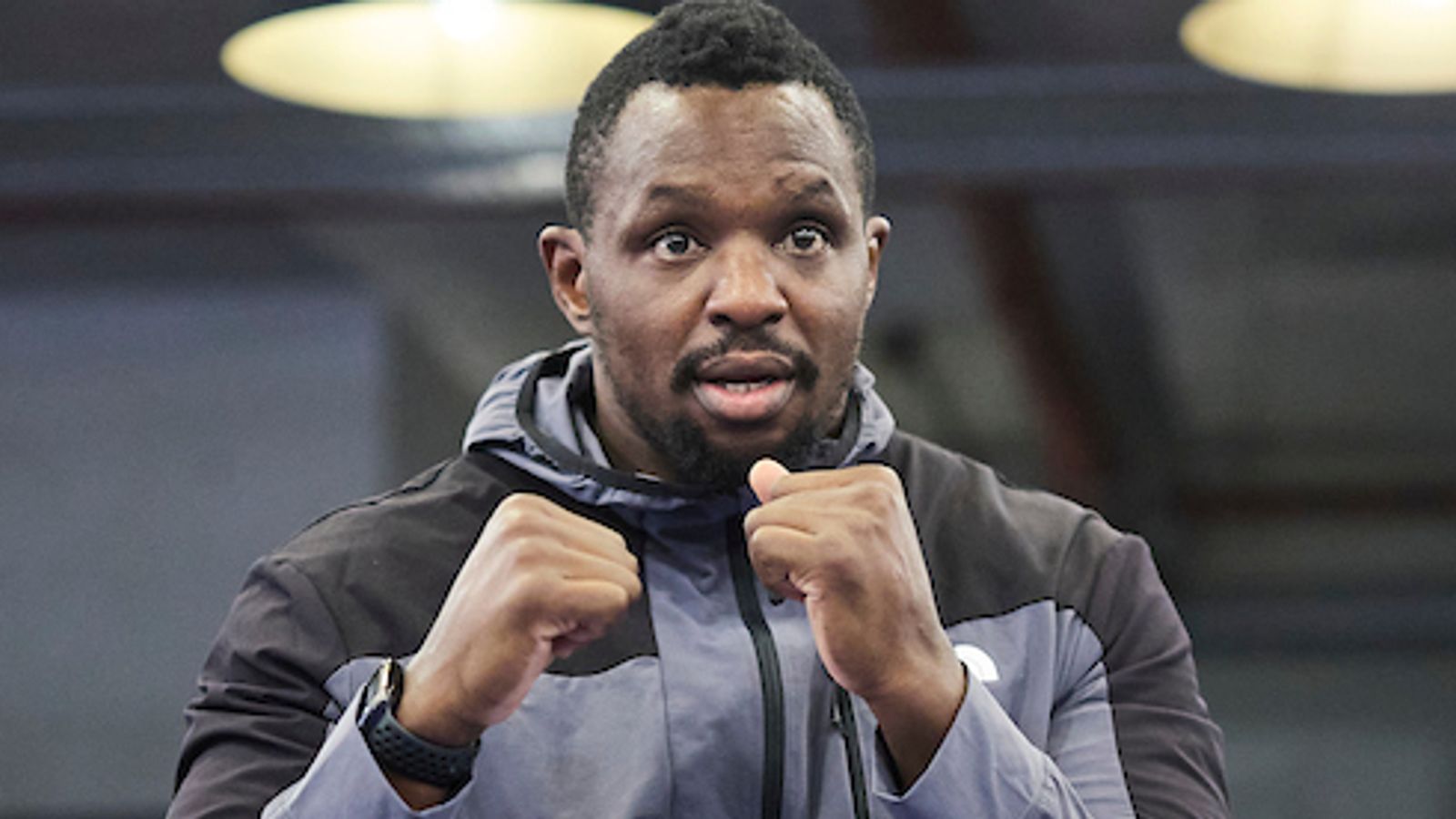
Dillian Whyte has spent what feels like a lifetime trying to get Deontay Wilder in front of him, and now, with Wilder suddenly short of a dance partner on the Cardiff undercard, the Brixton heavyweight has picked up the phone and made it simple: he's ready, he's training, and they know where to find him. This isn't a call-out designed to generate noise. This is a man who has been circling the same unfinished business for years, watching the opportunity drift in and out of reach, and refusing to let it disappear again without at least putting his hand up. The December 11 card at the Principality Stadium just got a lot more interesting on paper. Whether Wilder's side act on it is another question entirely.
The Phone That Nobody Made
The backdrop here matters. Jai Opetaia had been scheduled to face Wilder on the undercard of Tyson Fury versus Anthony Joshua in Cardiff, but Opetaia's withdrawal left Wilder exposed, [a problem that surfaced publicly almost as soon as it became real](/uprise/boxing/verhoeven-to-fight-wilder-hes-always-up-for-a-big). Wilder needs a fight. The Fury-Joshua card needs a heavyweight name in a prominent slot. And Whyte is not some late-notice throw-in scrambled together from a matchmaker's contacts list. He is a former WBC mandatory challenger with genuine, documented history with this rivalry, a fighter who has believed for years that he has the specific tools to cause Wilder serious problems.
That context is what makes Whyte's availability so compelling. He isn't gatecrashing. He's the man who arguably should have had this fight years ago, back when he sat at the top of the WBC's rankings while Wilder held the title, and the politics of the division conspired to keep them apart. The unfinished business is real, the needle is legitimate, and the timing, for once, might actually align.
"I've Been Trying to Fight Him for 100 Years"
Whyte's own words cut straight to it. "I've already waited 100 years for him," he told Sky Sports News, the hyperbole landing with the weight of genuine frustration behind it. And when you trace the actual timeline, the exaggeration isn't that far from the emotional truth. He waited at the top of the WBC rankings. He never got the shot at Wilder. The belt eventually passed on without the two men ever sharing a ring, and Whyte ended up challenging Fury instead, by which point the Wilder chapter felt closed by circumstance rather than resolution.
That is the specific itch Whyte is still scratching. He said clearly that he has always believed he could have beaten Wilder, and that he still believes it now. That is not a throwaway line. That is a fighter carrying a conviction across years of redirected energy and opportunities that went sideways. For anyone who watches boxing closely, that kind of unresolved belief tends to produce either the most motivated performances or the most dangerous overconfidence. With Whyte, given what we know of how he operates, it reads as the former.
What Whyte Actually Brings to This Fight
He was specific about how he sees the matchup, and that specificity is worth unpacking. He acknowledged the obvious: Wilder is a big puncher, he's wiry, he's fast. Those are not trivial concessions. Wilder's power is the kind of variable that has ended fights in ways that defied all logic and preparation, and Whyte is not pretending it doesn't exist. But Whyte's argument is that his mentality and his style create problems that Wilder hasn't always had clean answers for.
That framing is interesting because it suggests Whyte isn't planning to outbox Wilder at distance or survive by movement alone. The implication is a pressure-based, mentally durable approach, the kind of fight where Whyte's willingness to absorb punishment and keep walking forward becomes the weapon. Whether that is the right blueprint against Wilder's right hand is a debate worth having, but the point is Whyte has thought about it, believes in it, and has had years to refine the conviction. This isn't someone phoning in a short-notice opportunity for a payday. [The build-up to big Cardiff nights carries its own specific weight](/uprise/boxing/joshua-unable-to-see-new-baby-daughter-until-after-fury), and Whyte clearly wants to be part of it for the right reasons.
The Training Camp That Already Exists
Here is the detail that makes Whyte's offer genuinely credible rather than opportunistic bluster. He told Sky Sports News that he was already in the gym preparing for a December 18 return, one week after the Fury-Joshua card. That is not a fighter scrambling to get fit in a fortnight. That is a fighter who can step one week earlier than planned, into a bout he has effectively been preparing for in terms of mental readiness for years, with a physical camp already underway.
This changes the calculus entirely. Short-notice fights are usually the compromise you accept when no better option exists, the version where someone arrives underprepared and the quality of the contest suffers. Whyte is not offering that. He is offering a fully conditioned, motivated heavyweight with a genuine grievance and a point to prove, available on a week's notice because the work is already done. For a promotion trying to fill a slot on one of the biggest nights in British boxing in years, that is an unusually clean solution sitting right in front of them.
So Why Hasn't It Happened Yet?
That question is the uncomfortable one, and it hangs over all of this. The Wilder-Whyte fight has been possible, in theory, at several points across the years, and it has never materialised. The WBC rankings, the politics of promotional alignment, the direction of Wilder's mandatory defences, the timing of Whyte's own career trajectory, it has always found a way to not happen. Part of Whyte's frustration, buried inside the "100 years" line, is surely the awareness that credible opportunities have come and gone before.
This one feels different only because the circumstances have been stripped back to something brutally simple. There is a slot. There is a willing opponent. There is a fight that has genuine backstory and legitimate interest. If it still doesn't happen now, with all of that in place, then the conclusion is obvious: Wilder's side either don't fancy it, don't rate Whyte as commercially worthwhile, or have someone else already lined up. Any of those conclusions tells you something worth knowing about where both men are in the game.
The Verdict
Whyte's offer deserves to be taken seriously, and not just because he's available. This is a fighter who was denied a legitimate shot at the peak of his powers, who has carried the belief that he would win it for years, and who is now trained, motivated, and asking for it on the kind of terms that rarely exist in heavyweight boxing. [The Cardiff card is shaping up as the kind of night that defines careers](/uprise/boxing/price-hopes-undisputed-history-could-lead-her-to-shields-showdown), and a Whyte-Wilder grudge match, years in the making, would be a proper fight on a proper stage.
If Wilder's camp picks up that phone, we get one of the more emotionally loaded heavyweight contests British soil has seen in a while. If they don't, Whyte will have done everything right and the sport will have done what the sport occasionally does: found a way to make the obvious thing not happen. His message was simple. They know where he is. The ball is squarely in Wilder's court.