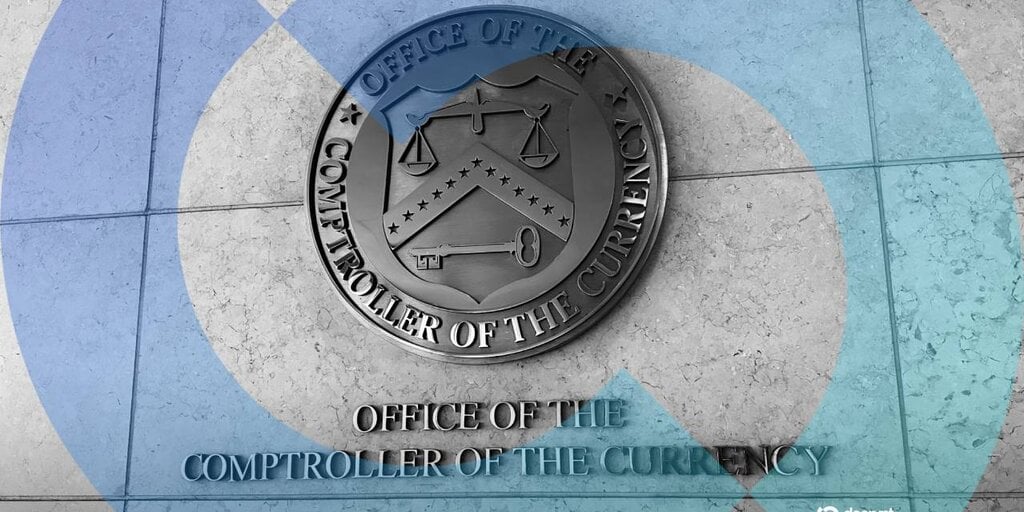
This is what legitimate looks like — and the market noticed immediately.
Circle, the company behind USDC, has been handed final approval from the Office of the Comptroller of the Currency to establish a national trust bank. Its stock jumped 14% on the news. That's not a coincidence. That's the market pricing in something it's been waiting years to see: a major stablecoin operator actually getting folded into a proper federal framework rather than operating in the grey zones that have defined crypto finance since its inception.
What the OCC Approval Actually Means
Right now, Circle manages roughly $73.2 billion in USDC across a patchwork of state-level money transmitter licences. That's not inherently wrong, but it's messy — different rules in different states, different oversight, different reserve requirements. A national trust bank charter under the OCC changes that entirely. One regulator, one unified framework, one set of standards that applies coast to coast.
This matters beyond Circle's own balance sheet. USDC is embedded in DeFi protocols, used for international remittances, held by institutions and retail investors alike. When the thing underpinning all of that is operating under a fragmented regulatory structure, the risk profile is higher than it should be. A federal charter addresses that directly. It's not glamorous, but it's the kind of foundational work that makes the broader ecosystem harder to dismiss.
We've been tracking how US crypto regulation is shifting — the [Clarity Act getting a new draft and Robinhood's chain launch](/getohedz/crypto/morning-minute-robinhood-chain-explodes-onto-the-crypto-scene) happening in the same news cycle as this approval signals that 2025 is shaping up as the year the US finally decides to regulate crypto properly rather than litigate it into submission. Circle's OCC approval fits that pattern. This isn't a rogue decision — it's part of a wider pivot.
The Wider Ripple Effect
Circle wasn't alone in benefiting from the news. Coinbase gained around 5% on the same day, and Strategy picked up a similar move as Bitcoin bounced. The positive sentiment was contagious, though those gains are clearly secondary to what Circle itself achieved. As we noted when [Standard Chartered maintained its $100K Bitcoin call](/getohedz/crypto/strategy-bitcoin-sales-39mostly-noise39-standard-chartered-says-holding-100k), institutional confidence in crypto infrastructure is building — and regulatory clarity is the fuel.
The argument that stablecoins are too risky, too unaccountable, too outside normal banking oversight just got considerably harder to make. Circle will now be subject to the kind of federal scrutiny that traditional banks operate under. That's a constraint, yes — but it's also a signal to the institutions sitting on the sidelines that there's now a regulated on-ramp worth trusting.
Our Take
We're not easily impressed by regulatory news. Most of it is delay, ambiguity, or political noise dressed up as progress. This is different. A $73.2 billion stablecoin moving under a unified federal banking charter is a structural shift, not a headline. Circle played the long game — IPO filed, charter pursued, legitimacy earned step by step — and it's now ahead of nearly every competitor in the space because of it.
The 14% stock jump is the market acknowledging what took too long to arrive. The more important number is the $73.2 billion now sitting on firmer regulatory ground. That's the one that matters for everyone using USDC, not just Circle shareholders.