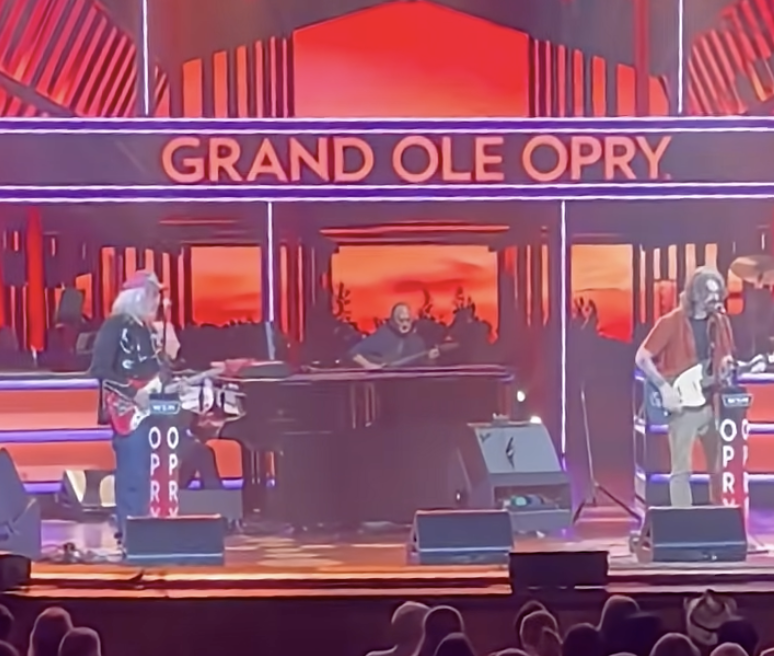
Nobody saw J Mascis and the Grand Ole Opry coming. That's exactly why it worked.
The Dinosaur Jr. frontman — one of the most quietly consequential guitar players of the last four decades — made his debut on the Opry's hallowed stage last night, introduced by Appalachian musician John R. Miller as a "monumentally influential practitioner of the guitar." Which is, frankly, underselling it. But you don't walk out onto that stage and start swinging superlatives around without earning them, and Mascis has earned them several times over.
The whole thing felt like the kind of booking that shouldn't make sense on paper but absolutely does once you think about it for five seconds.
The Opry Keeps Doing Unexpected Things Right
The Grand Ole Opry has a longer history of strange bedfellows than most people give it credit for. Country has always had a complicated relationship with rock's fringes, and the Opry — for all its tradition — has never been purely about playing it safe. Still, J Mascis in Nashville is a sentence that would have raised eyebrows even a week ago.
John R. Miller is the right person to have made it happen. His new record The Great Unknowing — recorded at Leon Russell's legendary Church Studio in Tulsa and released digitally last week — sits in that rich Appalachian alt-country territory that understands the connective tissue between a loud, distorted guitar and an old mountain ballad better than most. Miller returning to the Opry and pulling Mascis into the room with him says something about where his head is at: this is an artist who knows the lineage he's working in and isn't afraid to draw unusual lines through it.
That Church Studio session is worth mentioning separately. Leon Russell's former recording space carries serious weight — it's the kind of room where the walls do half the work — and The Great Unknowing sounds like it absorbed all of that history. Getting the record out and then immediately heading back to the Opry to introduce a noise-rock legend feels like a very deliberate statement of intent from Miller.
What This Actually Means
We're not going to overstate it. Mascis walking onstage at the Opry doesn't signal some great genre collapse or a new era of country music. It's one night, one appearance. But it matters because of what it represents: the acknowledgement, from inside one of the most tradition-bound institutions in American music, that guitar mastery doesn't live in one genre's house.
Mascis built his reputation on a very specific kind of playing — loud, melodic, deceptively emotional, the sort of thing that made a generation of musicians realise the electric guitar still had things to say. The fact that the Opry is a place where that gets recognised and celebrated in 2025 is not nothing.
Miller introducing him that way, in those words, on that stage, is a small but real moment. Country and its surrounding territories have been quietly reclaiming the guitar as a serious instrument for years now. This is one more data point in that story.
Our take: J Mascis at the Grand Ole Opry is the kind of crossover that didn't need to be announced in advance, hyped up, or explained. It just happened, and it was right. More of this, please.