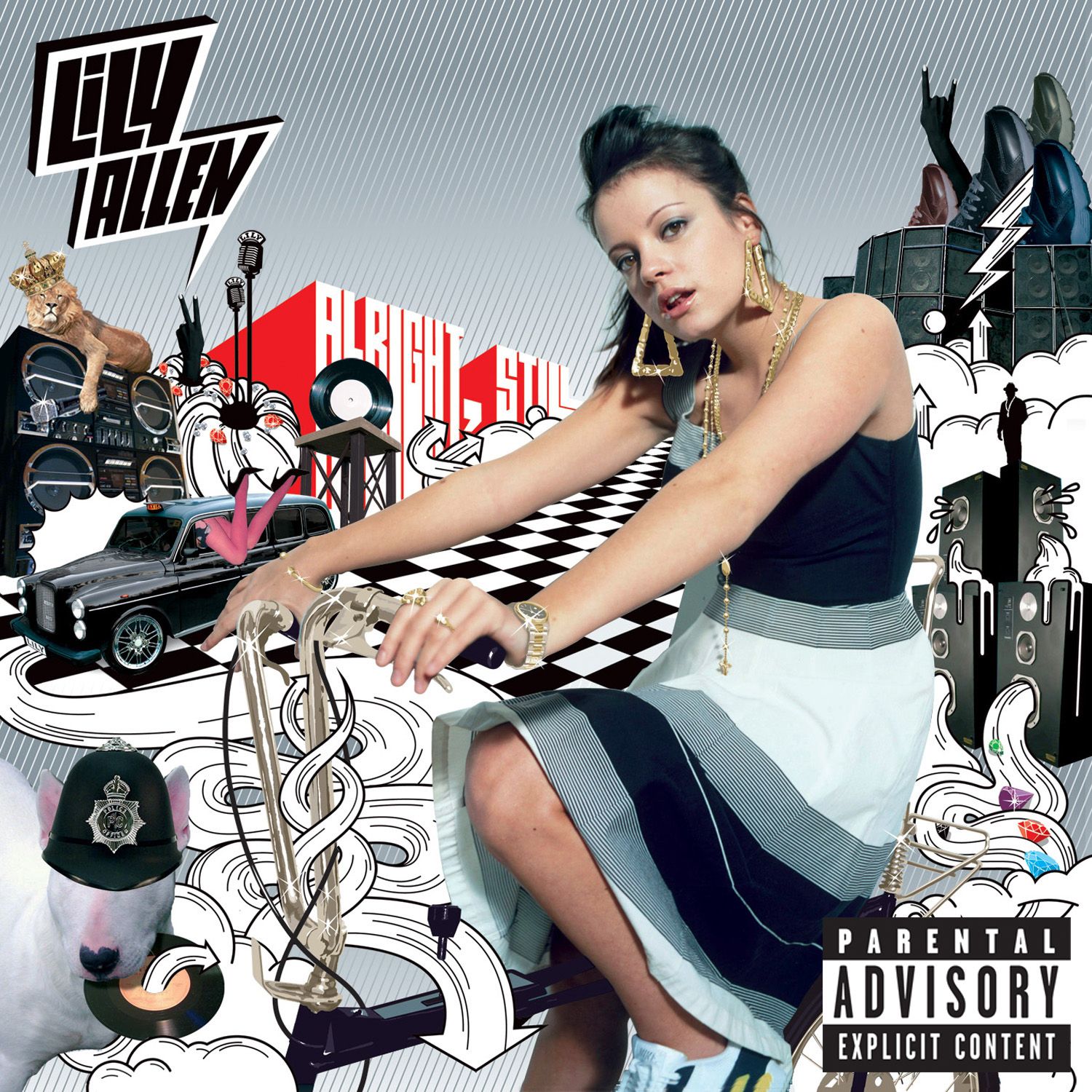
Twenty years on, Alright, Still remains one of the sharpest debut albums British pop has ever produced — and we're still not sure the industry fully reckoned with what Lily Allen actually pulled off.
The record turns 20 this year, and the anniversaries are piling in from every corner of music media. Fair enough. Because when you sit with what this album actually represented in 2006, it's hard not to feel like it arrived from a completely different planet to everything else on the charts at the time.
MySpace Made Her, But She Made MySpace Mean Something
Before the label machine got involved, before the magazine covers, Lily Allen was building her audience track by track on MySpace. That's not a trivial detail — it's the whole story of how Alright, Still happened. She wasn't handed a deal and a team of Swedish songwriters. She uploaded songs, people found them, and the word spread the old-fashioned way, just on a new platform.
That context matters because it shaped what the record sounded like. It was direct, personal, occasionally vicious, and completely unbothered by what it was supposed to be. Ska rhythms, grime influences, kitchen-sink lyricism — she was describing her actual life and the people in it with a precision that most pop acts wouldn't dare attempt. The industry rewarded her with a top-of-the-charts debut. Which, honestly, doesn't happen often enough.
Brit-Brat Pop Was Never Really Replicated
What Alright, Still kicked open was a very specific lane — call it Brit-brat pop if you like — that plenty of artists tried to walk down afterwards and most of them stumbled. The combination of lightness and sharpness, of a genuinely working-class London perspective delivered over something you could actually dance to, proved harder to imitate than it looked.
There's a reason we're still talking about this record at 20 when plenty of its contemporaries have been completely forgotten. It was rooted in something real. The attitude wasn't performed. The observations weren't focus-grouped. And crucially, the songs were properly good — melodic enough to stick, lyrically dense enough to reward a second listen.
It sits in a lineage of British artists who managed to be commercially enormous while remaining distinctly themselves. That's a rarer achievement than the chart positions suggest.
Our Take
Albums turning 20 can be a lazy excuse for nostalgia content. This one earns the retrospective. Alright, Still was a statement about who got to make pop music, how they got to make it, and who it was for — and most of that statement still lands.
The fact that it came up through MySpace rather than a conventional A&R pipeline wasn't just an interesting footnote. It was proof that when an artist has a genuine point of view and the songs to carry it, the audience will find them. That lesson gets rediscovered every decade or so. Lily Allen figured it out first.
Twenty years is a long time in music. The fact that Alright, Still sounds more like itself than it sounds dated tells you everything you need to know about whether it was built to last.
It was.