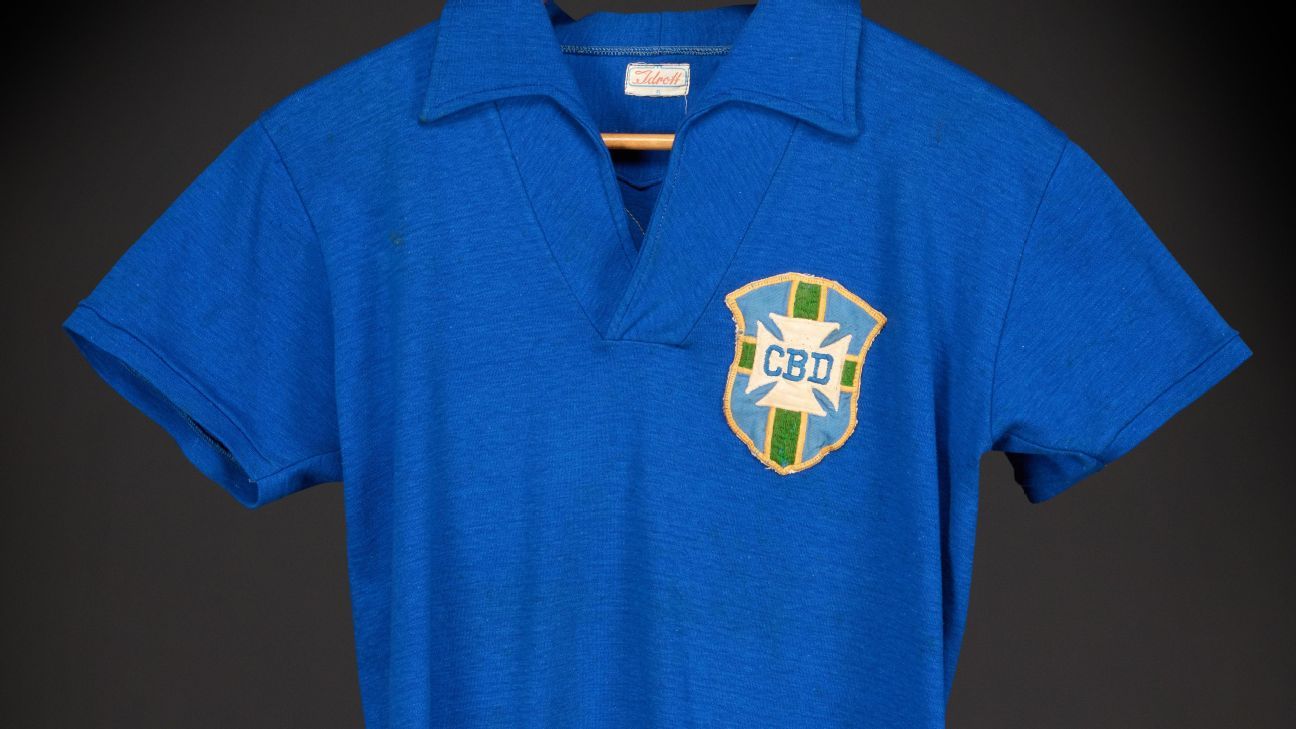
Nearly five million dollars for a football shirt. Let that land for a second.
Pelé's jersey from the 1958 World Cup final — the one he wore as a 17-year-old when Brazil dismantled Sweden 5-2 in Stockholm — sold at Sotheby's on Thursday for $4.88 million. That's roughly £3.6 million. For a shirt. And honestly? We're not even sure it's overpriced.
What We're Actually Talking About Here
This isn't some replica. This isn't a signed shirt from a meet-and-greet. This is the actual garment worn by arguably the greatest footballer who ever lived, in the most important match of his career, on the day he announced himself to the world. Pelé was a teenager when he pulled that Brazil shirt on in Sweden. He left that stadium a World Cup winner and a global icon.
The 1958 final is the stuff of football mythology. Brazil's 5-2 win over Sweden wasn't just a scoreline — it was a statement. And Pelé was at the centre of it, scoring twice including one of the most technically absurd goals you'll find on record: a chest trap, a flick over a defender's head, a volley into the net. He was seventeen. Most of us at seventeen were struggling with our GCSEs.
So when something like this shirt comes to auction, you're not buying cotton and dye. You're buying a piece of football that genuinely cannot be recreated or replaced.
The Bigger Picture on Football Memorabilia
We've watched the sports memorabilia market explode over the past decade, and football has been slower to the party than American sports — but it's catching up fast. Record-breaking sales like this one signal that the serious money is finally treating football history the same way it treats a Basquiat or a first-edition manuscript.
There's an argument to be made that this kind of valuation is obscene when the sport itself has structural problems — from grassroots funding to supporter costs. We get that argument. But the alternative read is that this is the market recognising what football fans have always known: that this sport produces moments and figures who transcend sport entirely. Pelé isn't just a footballer. He's a cultural monument.
The World Cup has always been the stage where that kind of legacy gets forged. We've been having those conversations again recently — about who leaves tournaments having written themselves into history — and it's worth remembering that the standard Pelé set at 17 in 1958 is the one every great player since has been measured against. Whether it's [Kane reflecting on what might be his last World Cup](/getohedz/football/kane-too-soon-to-decide-if-26-wc-was-my) or younger players making their names on that stage, 1958 remains the reference point.
Our Take
$4.88 million is a lot of money. It's also a completely logical price for what this shirt represents. There will never be another one. There will never be another Pelé, at 17, doing what he did in that final. The shirt is the closest tangible thing anyone can own to that moment.
We don't begrudge whoever bought it. We'd just quietly like to know where they're keeping it — because that thing deserves better than a storage unit in Geneva.