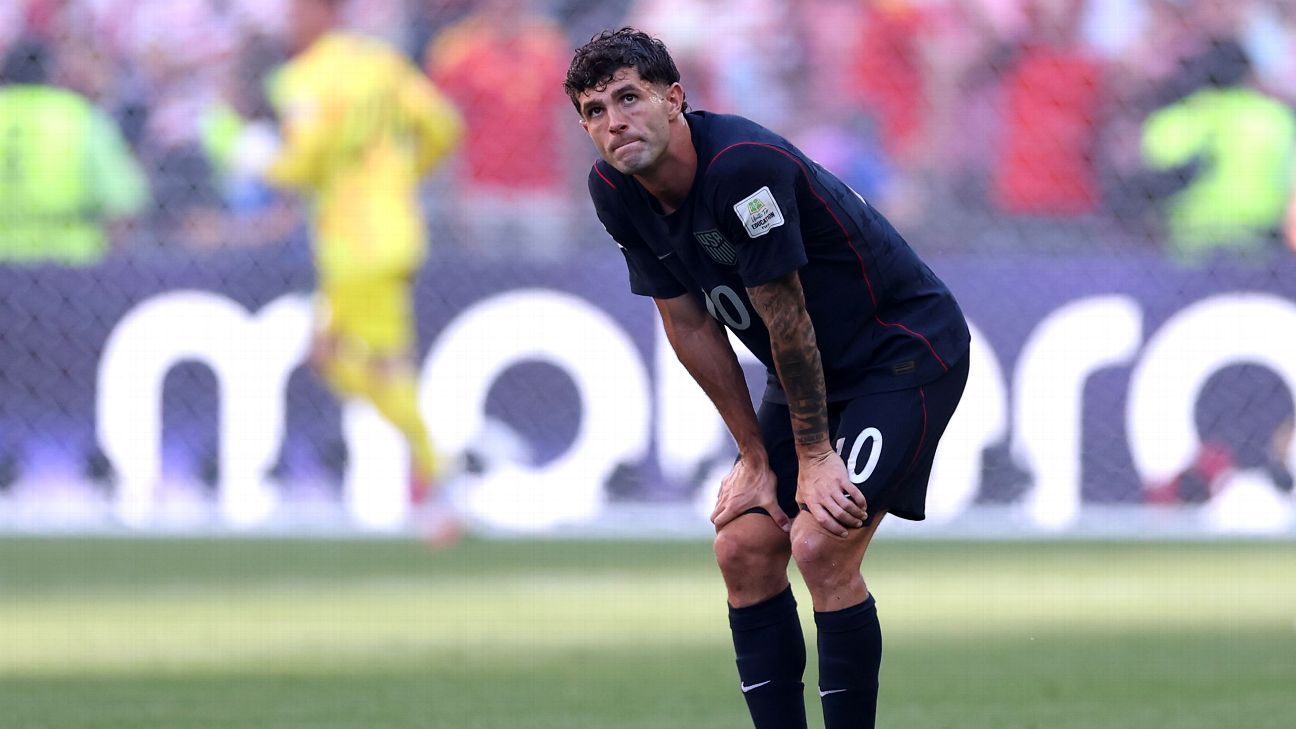
Christian Pulisic had everything lined up — home World Cup, peak age, a starting role — and somehow still managed to make himself the tournament's biggest question mark.
That's not a hot take. That's just what happened. The USMNT's supposed talisman turned up to the biggest stage American football has ever seen and left more confusion than inspiration in his wake. We're not here to pile on, but we're not going to pretend this wasn't a failure either.
The Moment That Never Came
When you think about what this summer was supposed to mean for Pulisic, it genuinely stings. A World Cup on home soil. The country tuned in, expectant. Milan form that had made him one of Serie A's more dangerous attackers. Everything pointed toward this being the tournament where he stepped out of the "promising American" bracket and into something more permanent.
Instead, he became the tournament's most talked-about mystery. Not in a good way. The performances weren't there. The decisive moments weren't there. For a player who'd spent years carrying the weight of a programme on his back, he picked the worst possible time to go missing.
It's worth checking [how the USMNT graded overall](/getohedz/football/usmnt-world-cup-grades-expectations-met) — because Pulisic's struggles weren't happening in isolation. This wasn't a team firing on all cylinders with one man letting the side down. There were systemic problems. But that context only explains so much when you're the designated match-winner.
How Much Is Actually On Him?
Here's where it gets complicated, and where we think the conversation deserves a bit more nuance than simply pointing fingers at the bloke in the number ten shirt.
The USMNT's problems have been building for a while. Anyone who watched them get turned over by Panama in the Nations League already knew alarm bells were ringing before a ball was kicked at the World Cup. Mauricio Pochettino's tenure raised serious questions about structure, identity, and whether this group of players were being set up to actually succeed. Those questions didn't disappear just because the tournament arrived.
And then there's the club form side of it. We saw what Pulisic was capable of at Milan — a player capable of driving at defenders, creating and finishing. The Fiorentina match showed the other side, a player who can go completely flat and leave his team chasing shadows. That inconsistency has followed him at international level for years now.
So yes, some of the blame lands on Pulisic. When you're the best player on the pitch in theory, you don't get to fully outsource accountability to the manager or the system. Leaders produce in big moments. That's the brutal standard.
But placing the entire weight of a tournament failure on one player — even the most prominent one — ignores every structural problem that surrounded him.
Our Verdict
Pulisic deserves some of the blame. Not most of it, but some. He's the one who built the expectation through years of being positioned as the face of American football's biggest moment. When you accept that role in the sunny days, you carry a share of the wreckage when it goes wrong.
The USMNT needed him to be their [Bellingham](/getohedz/football/bellingham-backs-england-stars-after-tuchel-fury) — the player who drags a team through when the going gets ugly. He wasn't that. What comes next for him and for the programme is the real question now.