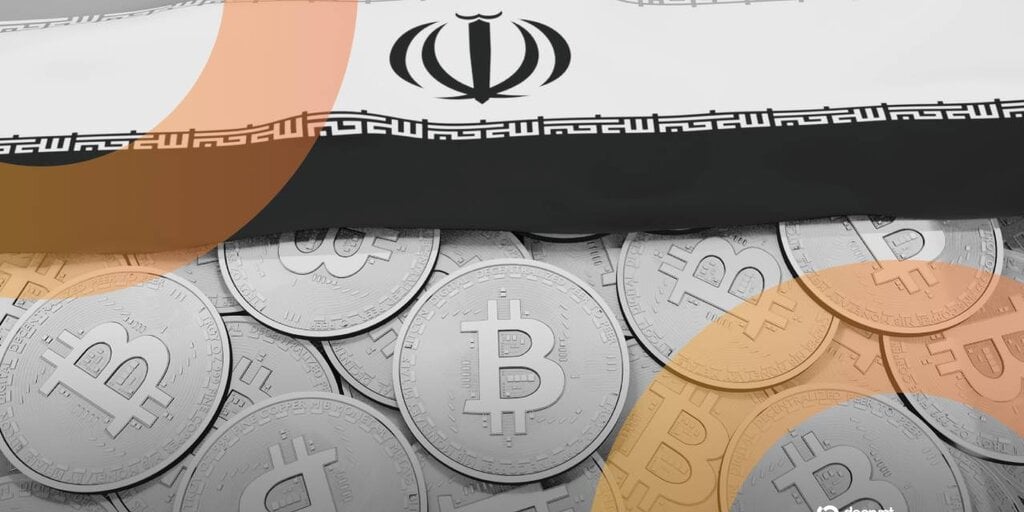
Bitcoin has officially graduated from "speculative asset" to "tool of geopolitical extortion" — and if that doesn't make you sit up, nothing will.
The US Treasury's Office of Foreign Assets Control (OFAC) has sanctioned two Iranian firms, one of them named Hormuz Safe, for operating what amounts to a Bitcoin-powered protection racket in one of the world's most strategically vital shipping lanes. If you wanted a case study for every concern critics have ever raised about crypto enabling bad actors, here it is, sitting in the middle of the Strait of Hormuz.
What Was Actually Going On
The setup is almost absurd in its brazenness. Ships passing through the Strait of Hormuz — a chokepoint through which a significant chunk of global oil supply flows — were being pressured into purchasing transit insurance from Hormuz Safe. The kicker? Payment accepted in Bitcoin and other digital assets.
This wasn't some obscure side hustle. It was a sanctionable operation serious enough to land on OFAC's radar, the same body that has the power to effectively cut any entity off from the US financial system and, by extension, most of the global one. The fact that these firms chose crypto as their payment method is not incidental. It's the whole point. Traditional banking leaves paper trails that regulators and intelligence agencies can follow. Bitcoin, for all its public ledger transparency, still offers enough distance from conventional financial infrastructure to be attractive to those who'd rather not deal with correspondent banks and wire transfer compliance.
We've covered how [rising real yields are a problem Bitcoin cannot ignore](/getohedz/crypto/rising-real-yields-are-a-problem-bitcoin-cannot-ignore) from a market perspective, but the reputational pressure that comes from stories like this one is a different kind of weight entirely. Every time a headline links Bitcoin to sanctions evasion, it hands regulators fresh ammunition and gives institutional fence-sitters another reason to stay put.
Why This Matters Beyond the Headlines
There's a lazy take here — that this proves crypto is inherently criminal. We're not making it. Technology is not a moral agent. The problem isn't Bitcoin existing; the problem is that the infrastructure around it still has gaps wide enough for Iranian firms to run what is essentially a toll booth with digital currency.
What this does demonstrate, though, is that crypto's utility for bad actors is not theoretical. It's operational, it's documented, and it's now formally sanctioned by one of the most powerful financial enforcement bodies on the planet. That's a different conversation to the one the industry tends to have with itself. The community loves talking about [agentic finance and AI-driven transactions](/getohedz/crypto/xdc-ai-and-the-rise-of-agentic-finance-when-ai-agents-learn-to-pay) as the frontier — and fair enough, that's genuinely interesting — but the boring, uncomfortable work of building compliance frameworks that actually function in adversarial geopolitical conditions rarely gets the same energy.
OFAC sanctions do not, on their own, prevent anything. They create legal exposure and restrict access to US financial systems, but determined state-adjacent actors have shown repeatedly that they can operate around that. The sanctions here matter as a signal and a legal instrument, not as a magic switch.
Our Take
This is one of those stories that will be used selectively by everyone with an agenda. Crypto critics will wave it as proof of concept. Maximalists will argue the blockchain's transparency actually helped identify the scheme. Both sides will miss the point.
The point is this: when Bitcoin becomes the payment method of choice for forcing cargo ships through a geopolitical chokepoint, the industry can't just shrug and say "not our problem." It very much is.