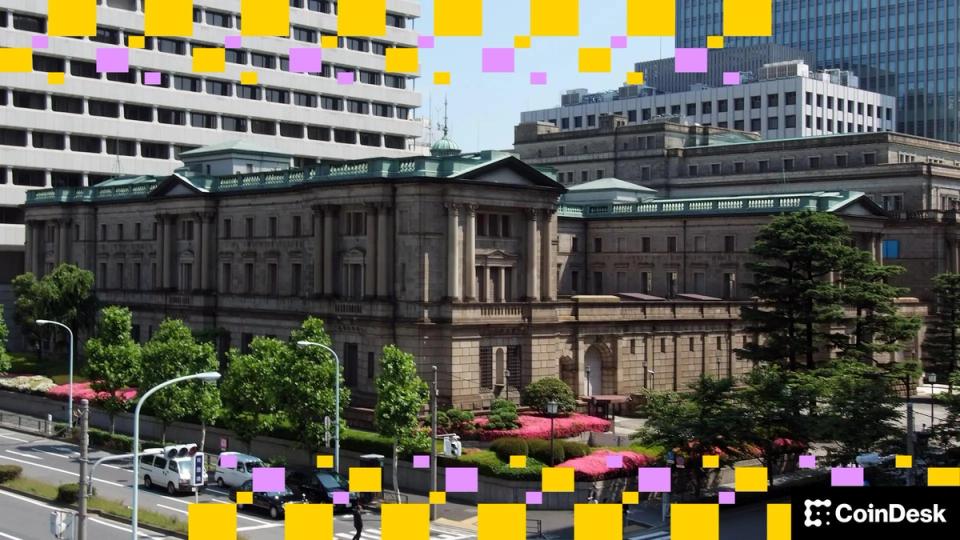
Japan's central bank is looking at rate hikes that could push borrowing costs past 2%, and if you think that's someone else's problem, you haven't been paying attention.
A former Bank of Japan official has come out with a stark warning: the BOJ may accelerate its rate-hiking cycle well beyond what markets are currently pricing in. This isn't a fringe take from a retired bureaucrat with nothing to lose — it lands against a backdrop of a yen that keeps sliding against the dollar and a hawkish faction inside the BOJ that's been getting louder. One sitting policymaker has reportedly called for rate hikes roughly once every few months. That's a pace the market absolutely is not ready for.
Why Crypto Should Be Watching Tokyo
The connection between Japanese monetary policy and Bitcoin isn't obvious at first glance, but it's real. Japan has been one of the world's great sources of cheap liquidity for years. Ultra-low rates meant investors could borrow in yen at next to nothing and park that money in higher-yielding, higher-risk assets — crypto included. When that trade unwinds, it doesn't unwind quietly.
We saw a version of this play out before. When the BOJ made even modest moves toward tighter policy, it rippled through global risk assets fast. A rate-hiking cycle that pushes borrowing costs above 2% wouldn't just squeeze carry traders — it would reshape the entire risk-appetite calculation for anyone with meaningful exposure to speculative assets. [Bitcoin's sensitivity to macro policy isn't new territory for us](/getohedz/crypto/bitcoins-62k-pullback-is-a-fed-flinch-not-a-rally-collapse) — we've written about how quickly it buckles under central bank pressure — but the BOJ accelerating while the yen weakens simultaneously is a specific kind of mess.
The dissent inside the BOJ is also worth noting. Reports suggest the policy board is no longer a unified bloc. A policymaker linked to political figures associated with faster hikes has already broken ranks. When internal dissent starts surfacing in an institution as tight-lipped as the BOJ, it usually means the direction of travel is already decided — the debate is just about speed.
What Actually Happens to Bitcoin If This Plays Out
Higher Japanese rates strengthen the yen, which means the carry trade that funded so much risk-on positioning gets unwound. Capital flows back into yen-denominated assets. Leverage comes off. Risk appetite shrinks. Bitcoin, which has spent the last cycle attracting serious institutional money, is no longer immune to that kind of mechanical selling pressure.
None of this is a death sentence for crypto. But anyone treating Bitcoin as a pure store of value that floats above macro currents is kidding themselves. The [tokenised asset space](/getohedz/crypto/the-5-real-world-assets-being-tokenised-fastest-onchain) is maturing, institutional exposure is growing, and with that comes genuine correlation to the same forces that move bonds and equities.
The BOJ moving faster than expected is a macro event. Full stop.
Our take: This isn't the moment to dismiss Japanese rate policy as background noise. If the BOJ genuinely accelerates toward 2% and beyond, the liquidity conditions that have quietly supported risk assets — crypto among them — tighten in ways that are hard to predict and fast to feel. Watch the yen. Watch the BOJ. And stop assuming the next Bitcoin move will be made in America.